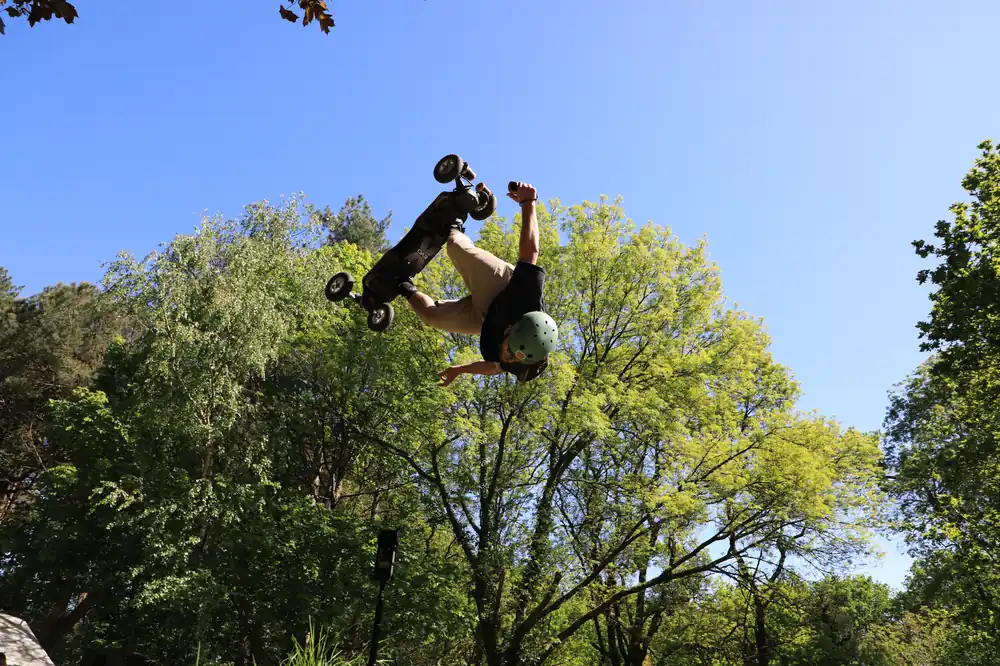
Too technical, too young, not for girls, too dangerous. We've heard plenty of prejudices about electric skateboarding. We'll explain why none of them really hold up, and why this practice is one of the most accessible in electric mobility today.
In short: you don't need to be an experienced, young, sporty, or athletic rider to electric skateboard. The throttle replaces foot-pushing, balance is learned in a few sessions, and the community doesn't judge. Since we started designing our skateboards in Pornichet, we've seen all kinds of profiles. Teens, retirees, busy execs, experienced athletes, complete beginners, surf riders, mountain bikers, nostalgic longboarders, people recovering from injuries. Only one thing in common: the desire to ride. The rest, you learn.
Table of Contents
- The throttle changes everything
- No typical profile, just riders
- Age is not a barrier, caution is
- No need to be athletic
- From zero skill to experienced rider
- Are you from surf, longboard, or snow sports?
- Democratization and feminization of riding
- City, countryside, seaside
- The Pornichet community
- What can be a hindrance, honestly
- Is it for you?
- Frequently asked questions
The throttle changes everything
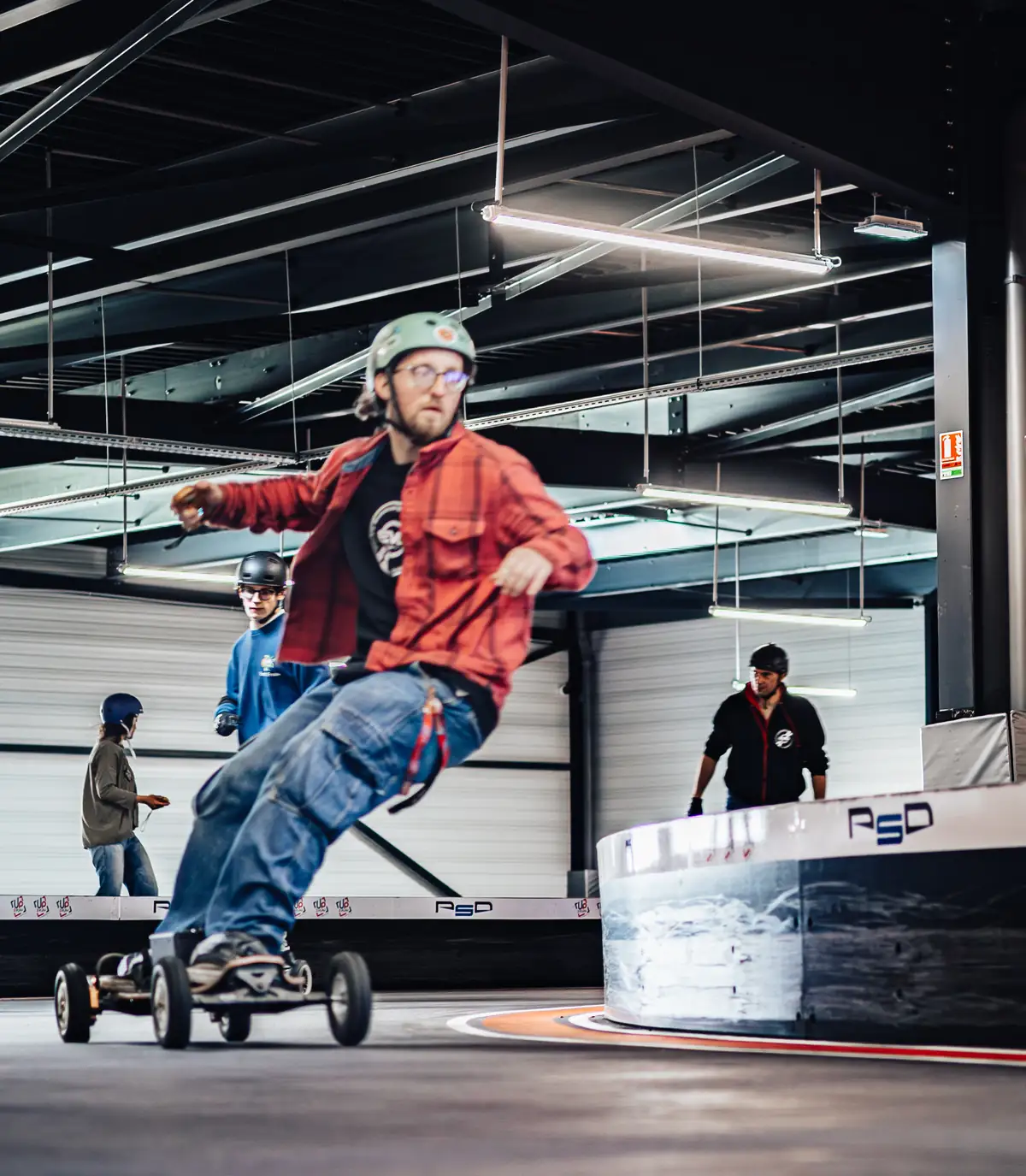
The big difference with classic skateboarding is propulsion. On a classic skateboard, you push with your foot. It's a technical, asymmetrical movement that requires real coordination and immediately rules out many profiles. On an electric skateboard, propulsion comes from the motor. You hold the board, you control it with a remote control, you accelerate and brake with the throttle. You steer, you no longer propel yourself.
Concretely, what does that change? Three things.
You no longer have to master the coordinated push, which is the first big hurdle in classic skateboarding. This hurdle eliminated many people, especially adults who started late. With a motor, it disappears.
The physical effort shifts. You're no longer relying on endurance to move forward; you're focused on balance and control. This makes it more accessible to non-athletic profiles and less strenuous over long distances.
Acceleration is controlled. A progressive throttle allows you to fine-tune it to the millimeter. Beginner modes on modern ranges cap speeds at reasonable levels and smooth out starts. You don't have to worry about being thrown off with the first push.
What's left to learn is balance and reading the terrain. This is much less technical than pushing, and you can work on it in a few sessions.
No typical profile, just riders
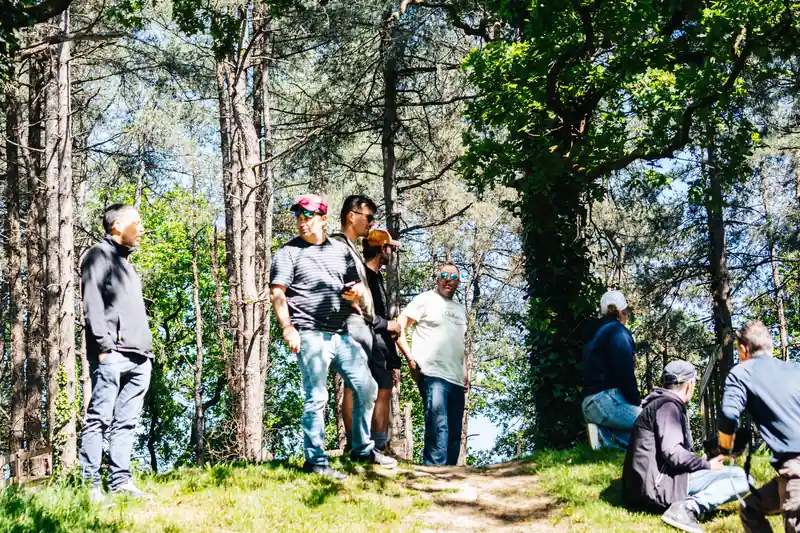
We're often asked who an electric skateboard is for. The honest answer is that we don't have a typical profile. We have riders. And they don't all look alike.
We have the 45-year-old executive who's fed up with traffic jams and rides three kilometers from office to home on their board, suit and helmet on. We have the 15-year-old teen who comes to choose their first board with their father. We have the 65-year-old retiree who wants to reconnect with the sensations they had longboarding when they were young. We have the mother who escapes on Sundays on the promenade's bike path. We have the experienced rider, longboarder or surf-skater, who adds e-skate to their repertoire because it gives them sensations they don't get elsewhere. We have the person returning to sports after a broken knee, looking for a fun activity with low impact.
The only common denominator is the desire to ride. We don't ask for your age, profession, skill level, gender, or body type. We ask what you want to do with the board, and we guide you towards the model that suits you.
Age is not a barrier, caution is
Regarding French regulations, the EDPM version authorized on public roads requires a minimum age of 14, a helmet, and adherence to the Highway Code (speed limited to 25 km/h, priority for bike paths, etc.). This is the legal framework, and you need to know it before buying.
In terms of practice, on private land or with the Sport version (unrestricted, not intended for public roads), there is no legal minimum. What matters is the rider's physical ability to handle the board, their sense of balance, and supervision by a responsible adult if they are a minor.
At the other end of the spectrum, there's no maximum age. We have riders over 60 who regularly ride with us. What changes with age isn't access to the practice, it's the caution you need to adopt. You adapt your riding mode, choose your terrains, avoid sequences of bumps and sharp turns until you're comfortable, and ride with protective gear.
Electric skateboarding lends itself well to gentle progression. You can ride for ten years in a relaxed beginner mode if that's your thing. No one will ask you to increase your responsiveness.
No need to be athletic
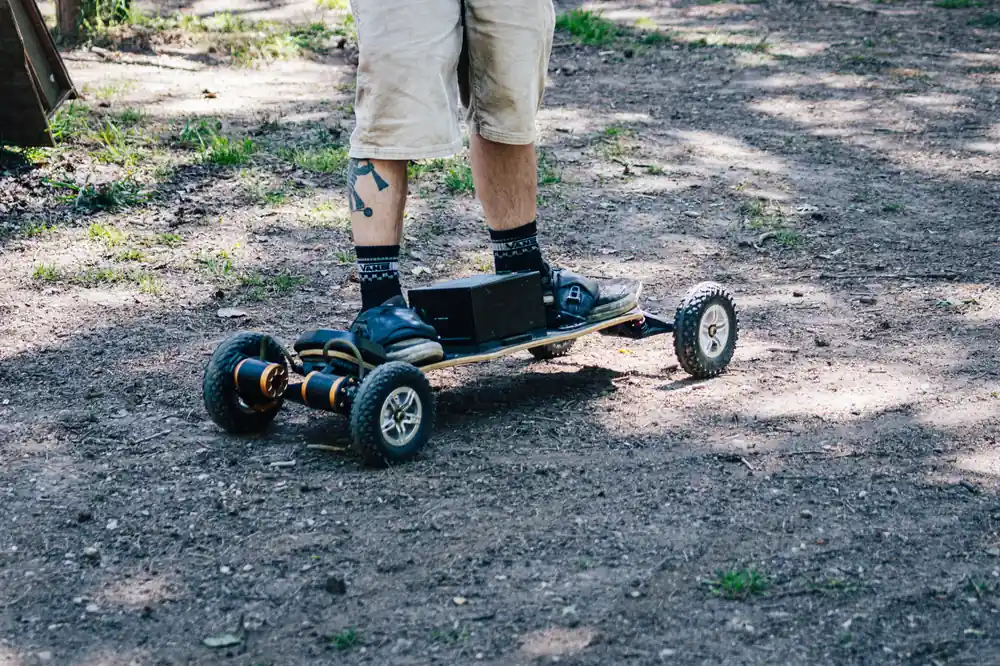
Electric skateboarding requires effort, but not the kind you might imagine. You're not doing cardio endurance, you're not using brute strength, you're not performing explosive movements. You're focusing on balance and proprioception. Your legs engage just enough to absorb irregularities and maintain your trajectory. Core strength works incidentally. Your heart rate remains moderate during most sessions.
Compared to other board sports, the effort is less. Surfing requires paddling, holding your breath, and quick take-offs. Mountain biking requires pedaling, especially uphill. Skiing demands continuous muscle concentration in turns. Electric skateboarding, on the other hand, carries you. You don't have to provide the motor power.
What it truly works: dynamic balance, proprioception, terrain reading, and eye-foot coordination. Three qualities that can be developed at any age and maintained for a long time.
What it doesn't wear out: your joints, provided you ride smoothly and don't seek falls. It's one of the least traumatic board sports for knees and ankles, if you adopt a reasonable riding style.
That's also why we see so many people returning to sports on our boards. After knee surgery, after a long break, after pregnancy, after prolonged sedentary work. The board gets you moving again without breaking you.
From zero skill to experienced rider
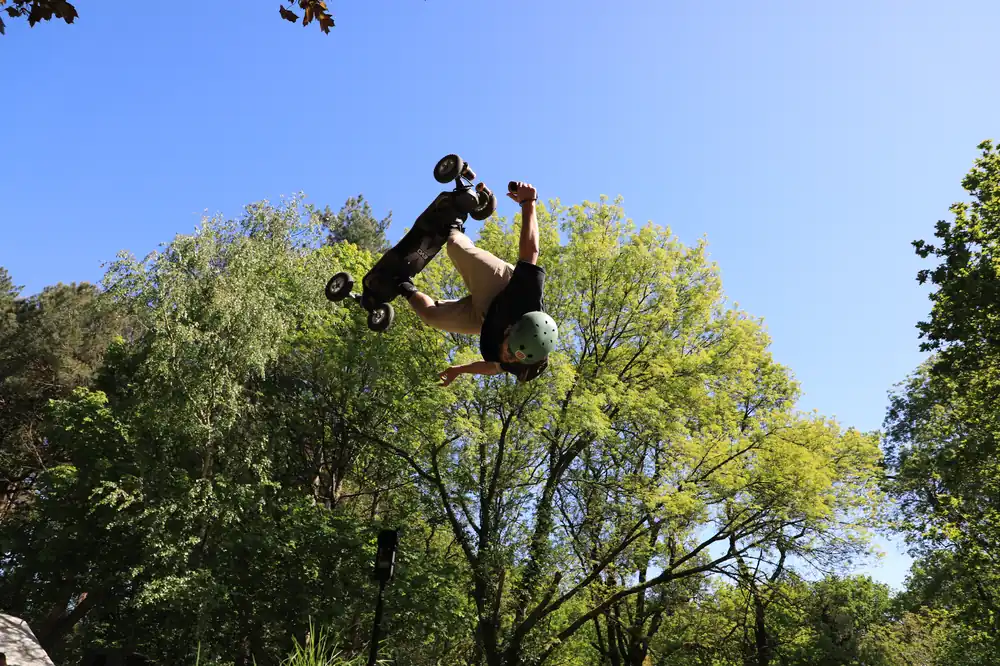
Modern electric skateboards offer several riding modes, generally three or four depending on the model. Beginner mode, intermediate mode, sport mode, sometimes a customizable mode. Switching from one mode to another is done via the remote control, in a few seconds, and changes the acceleration curve, top speed, and braking responsiveness.
Beginner mode is your entry point. Smooth acceleration, reduced speed cap (often around 15 to 20 km/h depending on the model), progressive braking. You learn without being caught off guard by sudden acceleration.
Intermediate mode is for when you're comfortable. More responsiveness, higher speed, more pronounced sensations. This is the mode many riders stay in for cruising, as it offers a good comfort-to-sensation compromise.
Sport or expert mode is full power. You use it when you've mastered your board, when you know the terrain, and when you have the appropriate gear. It's not the mode for learning.
And if you've already skated, surfed, or ridden elsewhere, you'll skip a good part of this learning curve. You already know how to apply pressure and shift your weight, so settling into intermediate or sport mode will only take a few sessions.
Are you from surf, longboard, or snow sports?
If you already come from board sports, electric skateboarding doesn't ask you to start from scratch. It extends sensations you already know: carving, pressure, speed, on demand.
Your reflexes transfer directly. The weight transfer from surfing, terrain reading from mountain biking, commitment from snowboarding, the low stance from longboarding: all of this helps you from the very first minutes. Where a beginner builds their stance, you already have it. You primarily save time on getting started and move faster to playing with the terrain.
It's not a replacement, it's a complement, and everyone here finds their fit depending on their original sport. Greg and Anaïs come from the ocean: the board takes over on days without waves or wind. Violaine, a snowboarder, finds carving without waiting for snow. Yvan and Maxime, already mountainboarders, gained motorization: no more pushing uphill, more runs in the session.
Beyond the sensations, it's a real way to continue progressing when conditions aren't ideal: maintaining your balance, working on your carving and weight transfers off-season, and keeping the movement during recovery after an injury.
Democratization and feminization of riding
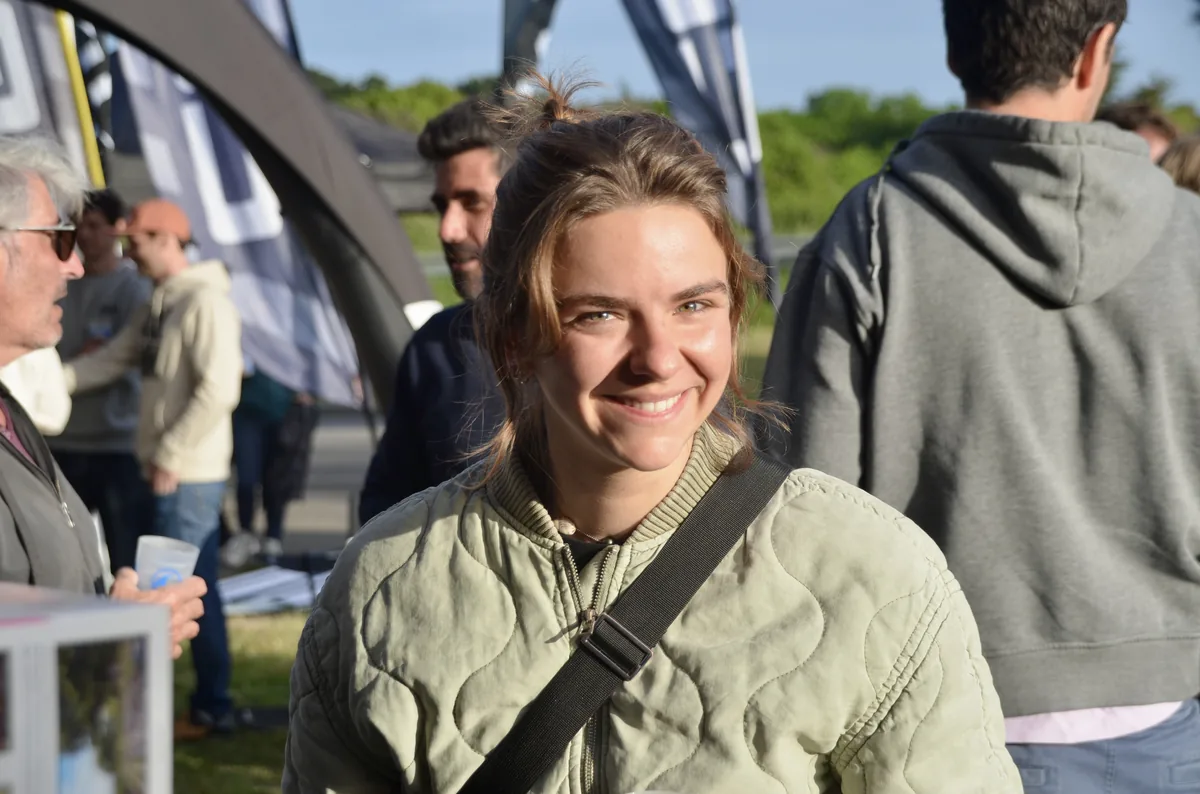
All board and ride sports have become democratized and feminized over the past fifteen years. Surfing, mountain biking, climbing, snowboarding, longboarding, surf-skating, wing-foiling. Schools welcome as many female as male participants in beginner sessions, women's competitions push the sports forward, and brands evolve their ranges. The idea of a "naturally masculine" sport is outdated, and it was already ten years ago.
Electric skateboarding is no exception to this trend. And here, we don't really care for the "women's special" angle because it implies there should be a separate category. But there isn't one. We don't make a "female version" board. The ergonomics are the same, the controls are the same, the beginner modes are the same. A female rider doesn't need a dedicated product; she needs the same product as everyone else, no more, no less.
Anaïs, who works with us, illustrates this well. She's been surfing and surf-skating for several years. When she joined Evo-Spirit, she had never set foot on an electric skateboard. We recruited her because she already had a background in riding, an aptitude for it, and an understanding of terrain. The rest was never an issue.
A few months later, she follows us on all sessions. 360 camera or phone in hand, thirty centimeters behind the rider in front, on root-filled and bumpy trails, at high speed. We knew she would love it, but we hadn't anticipated that she would become the team's official onboard camera.
The lesson: what matters is the desire, the aptitudes, the playground. Electric skateboarding is not a question of gender, it's a question of character.
City, countryside, seaside, your terrain is the right terrain
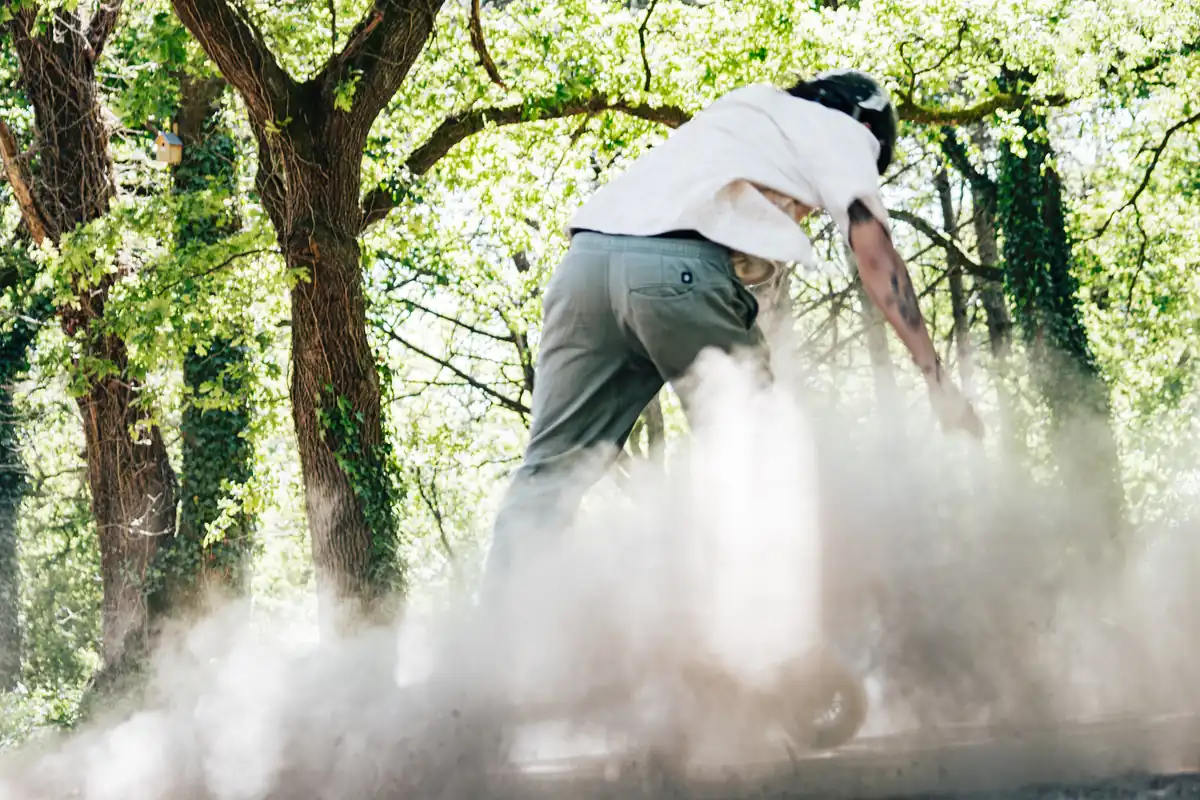
There's no "right" terrain for riding. There's yours, and there's a skateboard that fits it.
In the city, the board becomes a permanent playground. Accelerating at lights, reading curbs and elevation changes, slaloming through traffic. Soft but not too soft wheels, stable deck, progressive braking: you maintain control in traffic while having fun, whether for a daily commute or just for the pleasure of riding.
If you're in the countryside or want to leave paved roads, you'll want an all-terrain board. Bigger wheels, natural deck suspension, motor power for hills, range for long rides. You'll access trails, forest paths, easy single tracks. You extend the joy of mountain biking without the pedaling.
If you're by the sea like us in Pornichet, you have both. Paved promenades for family rides, coastal paths for sportier rides, secondary roads for connections. It's an ideal playground, and it's one of the reasons we set up the workshop here.
Our range covers both uses, city and all-terrain, in a Sport version for private use and an EDPM version for public roads. The choice is made by discussing your use, not by looking at technical specifications.
The Pornichet community
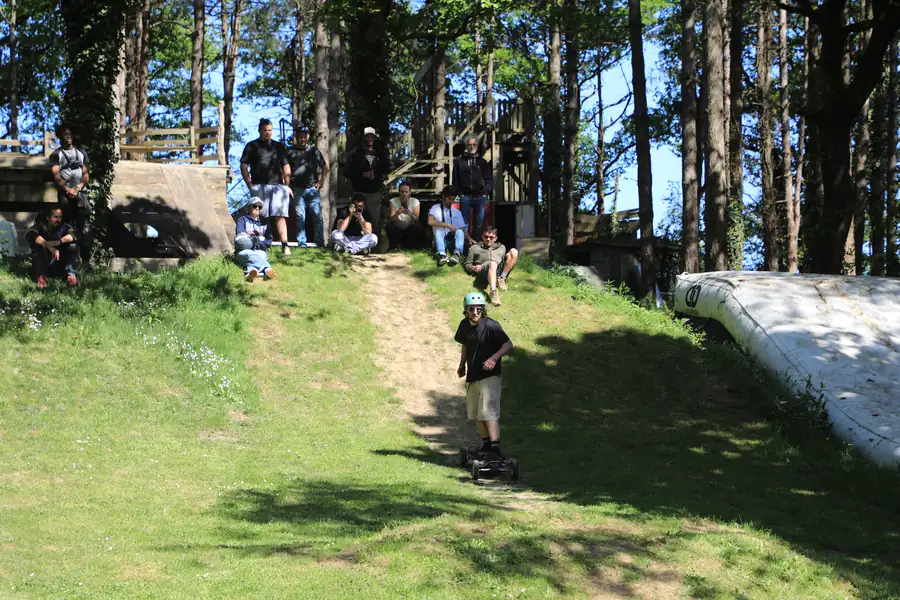
Riding is even better with others. And the practice has its own very real community, for anyone who wants to connect with it.
Here in Pornichet, we regularly organize open sessions. All skill levels mixed, from new riders to experienced ones. We don't separate them. Beginners learn by watching, experienced riders enjoy sharing their knowledge. That's been the spirit of the shop from the beginning, and we don't intend to change it.
The team plays its part in this spirit. Yvan and Maxime, who come from mountainboarding, are our field testers and our most seasoned riders on technical trails. Hugo is in the workshop; he assembles prototypes and knows every board inside out. Anaïs films and photographs the sessions. Maxime B shares his curiosity and energy with the rest of the team. And all of us, we ride together.
The annual event is the Pornichet e-skate Weekend. Several hundred riders converge, we ride, we share, we dine, we exchange gear. You don't have to go, but if you want to experience the practice firsthand, it's the opportunity.
What can be a hindrance, honestly
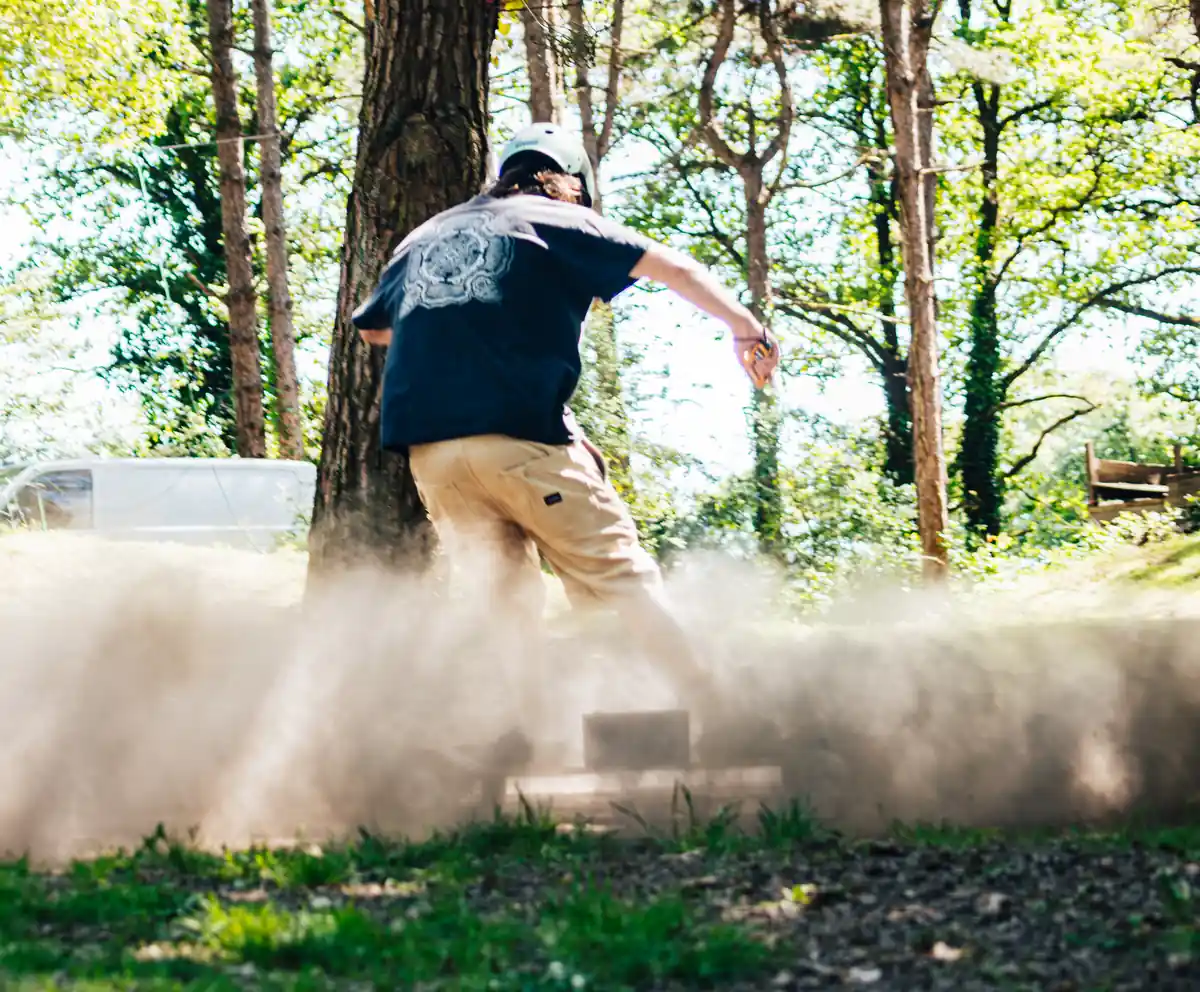
We're not going to sell you a dream without laying out the real limitations. Here's what might hold you back, and what you need to know before you start.
The weight of the board. Depending on the model, it's between 8 and 14 kg. This isn't negligible if you have to carry it up stairs every day. Consider this if you live in a building without an elevator.
The entry price. A quality electric skateboard, designed with reliable components and backed by genuine after-sales support, isn't found at a discount price. It's a leisure or mobility investment, to be weighed against what it replaces (transportation, short-distance car trips, electric bike).
The weather. Standard versions are not waterproof, just splash-resistant. Heavy rain or deep puddles should be avoided. So you practice during your weather windows, like an electric bike without fenders.
EDPM regulations. The road-legal version imposes a legal framework that must be respected (age, helmet, speed, authorized lanes). This is understandable but worth reading before purchase.
Charging time. Allow several hours for a full charge. If you want to ride morning and evening, plan to charge during the day or have a charger at the office.
These limitations don't diminish the pleasure of riding; they frame it. We prefer to lay them out upfront rather than have you discover them later.
Is it for you?
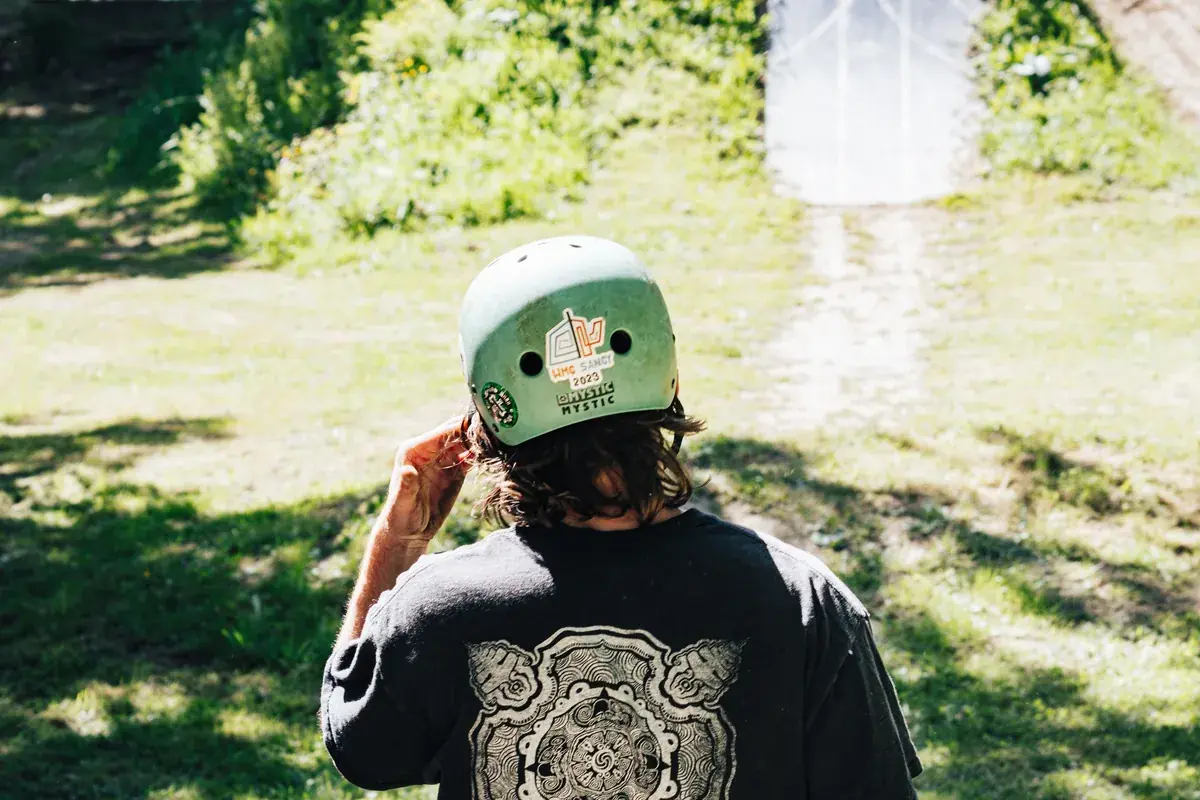
If you're a beginner: you want to commute differently, resume an activity after a break, rediscover board sport sensations without the classic push technique, or simply ride for pleasure without overthinking it.
If you already come from board sports (surf, longboard, snow, mountain biking): you're looking for a complement that you can ride every day, without depending on conditions or season, and that gives you carving and speed on demand.
In both cases, with one condition: you want to have fun on an electric board.
Frequently asked questions
Evo-Spirit has been designing and repairing its electric skateboards in Pornichet (Loire-Atlantique) since 2007. Electric skateboarding is accessible to a very wide audience: no classic skateboarding prerequisites, legal minimum of 14 years on public roads for the EDPM version, no maximum age for practice. Over 4.000 riders use their boards daily, across all profiles. The answers below address the most frequent questions about the accessibility of the practice.
What is the minimum age for electric skateboarding?
On public roads in France, the EDPM version requires a minimum age of 14, with a helmet and adherence to the Highway Code. On private land or with a Sport version, there is no legal minimum, but the child must be physically able to handle the board and be supervised by a responsible adult. We regularly see families starting together from 10-12 years old on suitable terrains closed to traffic.
Is there an age limit to start?
No, no maximum age. We have regular riders over 60 who ride with us every month. What changes with age is the caution you need to adopt and the choice of terrain, not access to the practice. The beginner mode of modern boards allows you to progress at your own pace, and electric skateboarding is particularly well suited for gentle progression.
Do you need to know how to ride a classic skateboard already?
No. That's a common misconception. The big difference between classic and electric skateboarding is that you no longer have to push with your foot. Propulsion comes from the motor, controlled by a throttle remote control. What's left to learn is balance and reading the terrain, and you can work on that in a few sessions. Many of our customers start with no skateboarding background.
Is electric skateboarding dangerous for beginners?
No more than cycling if you follow a few rules. Ride with protective gear (helmet mandatory for EDPM, knee and elbow pads recommended), start in beginner mode, choose flat terrain without traffic, and progress gradually. The beginner mode of modern boards caps the speed to help you avoid the pitfalls of early sessions, typically around 15 to 20 km/h. A good pair of shoes and a bit of humility do the rest.
How long does it take to stand on the board?
For the first sensations standing, allow about thirty minutes with good guidance. To ride independently on flat ground, a few one-hour sessions are enough. To tackle curves, dynamic braking, and some varied terrain, several weeks of regular practice are needed. It's progressive and rewarding, and the learning curve is significantly faster than with classic skateboarding.
I've never done a board sport, is that a problem?
No. Many of our customers start with no board sport background. What helps is a basic sense of balance (being able to stand on one leg, ride a bike hands-free) and the desire to learn. The rest is built session after session. If you have doubts, the best thing is to come and try a board at the shop before buying; we'll take the time to show you and let you test it.
In summary, electric skateboarding is one of the most accessible electric mobility practices. No classic skateboarding prerequisites, legal minimum of 14 years on public roads for the EDPM version, no maximum age for practice, beginner mode for a gentle start. The first sensations standing come in about thirty minutes, and independence on the board in a few sessions. Profiles are very varied, from the 45-year-old executive on a daily commute to the 65-year-old retiree reconnecting with riding, from the experienced female rider from surfing to the complete beginner returning to sports. If you have any doubts about the right model or version (Sport or EDPM), the Pornichet team is available by phone, email, or directly at the shop to guide you according to your profile, terrain, and expectations.
Electric skateboarding has no typical profile
Just the desire to ride. The rest, you learn. The best way to know if this practice is for you is to come and step on a board. In Pornichet, we take the time to show you, let you try it, and advise you on the model that suits your use. No sales pressure, just a conversation. If you're not in the region, write to us, we'll respond.
 Evo-Spirit
