Unlock your electric skateboard's full potential with our guide to adjusting trucks and bushings for an optimal ride.
Bushings and trucks:
fine-tune everything for a better ride
Proper truck adjustment transforms a simple ride into an exceptional experience. Experienced riders know: it all comes down to the bushings and how tight they are.
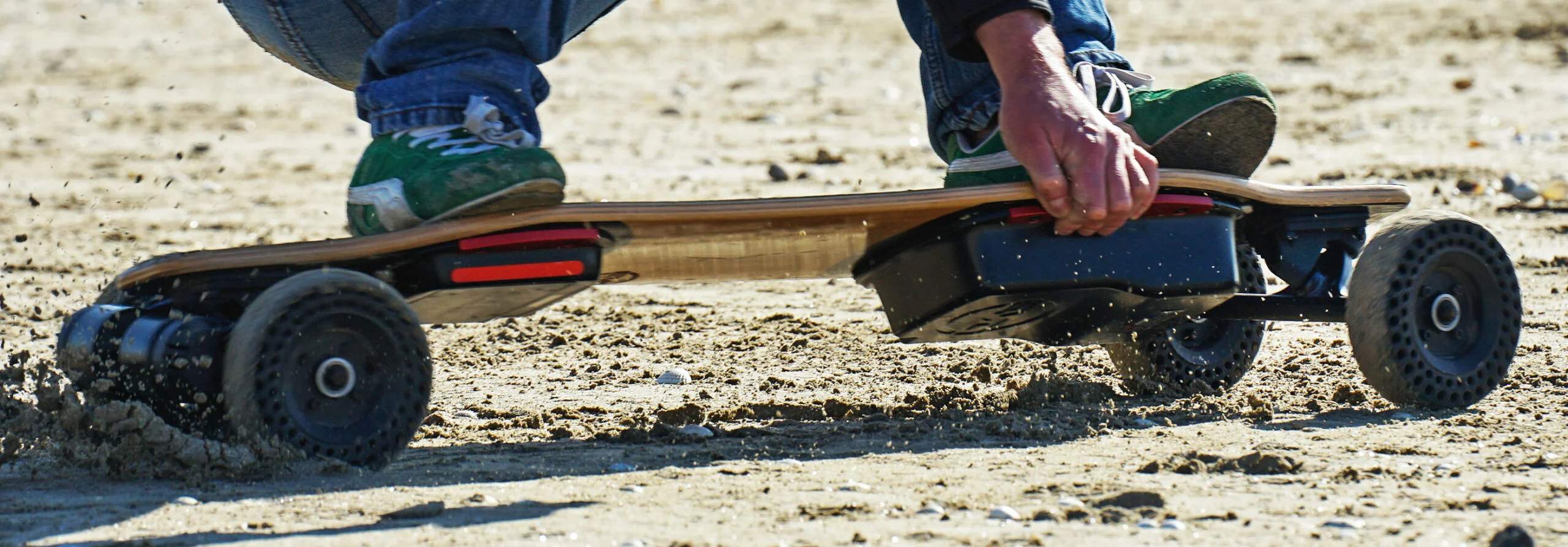
Why adjust your trucks?
Trucks adjust according to your weight and riding style. You have two parameters at your disposal:
- Bushings hardness: affects maneuverability and stability
- Truck tightness: tighter = more stable, looser = more agile
Your needs vary depending on your riding style: carving requires agility, while all-terrain and speed demand stability.
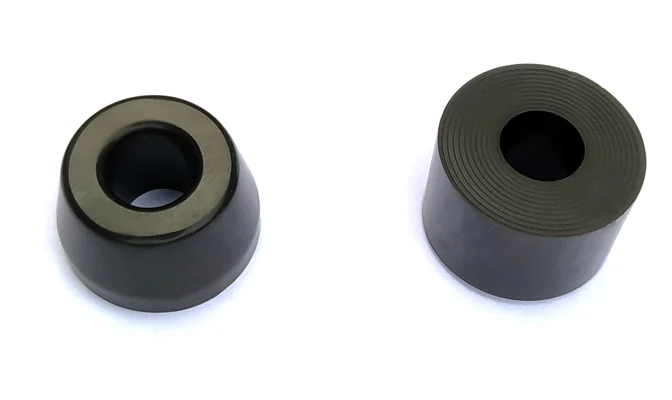
What are bushings?
Bushings are the small urethane rubbers that make up the trucks. There are two per truck: one above the hanger, the other between the hanger and the baseplate.
Our trucks come with 90A bushings designed for an average weight, an excellent starting point for most riders.
Hardness according to your weight
Hardness is measured in "duro": a number followed by an A (e.g., 90A). Our standard bushings are 90A, suitable for all users. The recommendations below are for the most demanding riders.
65 to 90 kg
Note: Hardness corresponds to a new bushing. After several hundred hours, the rubber will lose some of its hardness: a used 90A will become the equivalent of a new 85A, making your skateboard more agile.
Fine-tuning truck tightness
Like bushing hardness, tightness directly affects maneuverability. The tighter you go, the less you turn. The looser you go, the more you carve.
- Do you hear clicking sounds on the board? The bushing isn't compressed enough. Tighten it more.
- Si ton bushing est bombé par la pression, c'est qu'il est trop serré et ne remplit plus sa fonction. Opte pour un modèle plus dur.
Only one piece of advice: test it out!
Your original 90A bushings are suitable for most body types. Our team, made up of riders with different physiques, all ride with the 90A bushings that come with the board. There is no universal solution: the ideal adjustment is a matter of personal feel and sensation.
 Evo-Spirit
