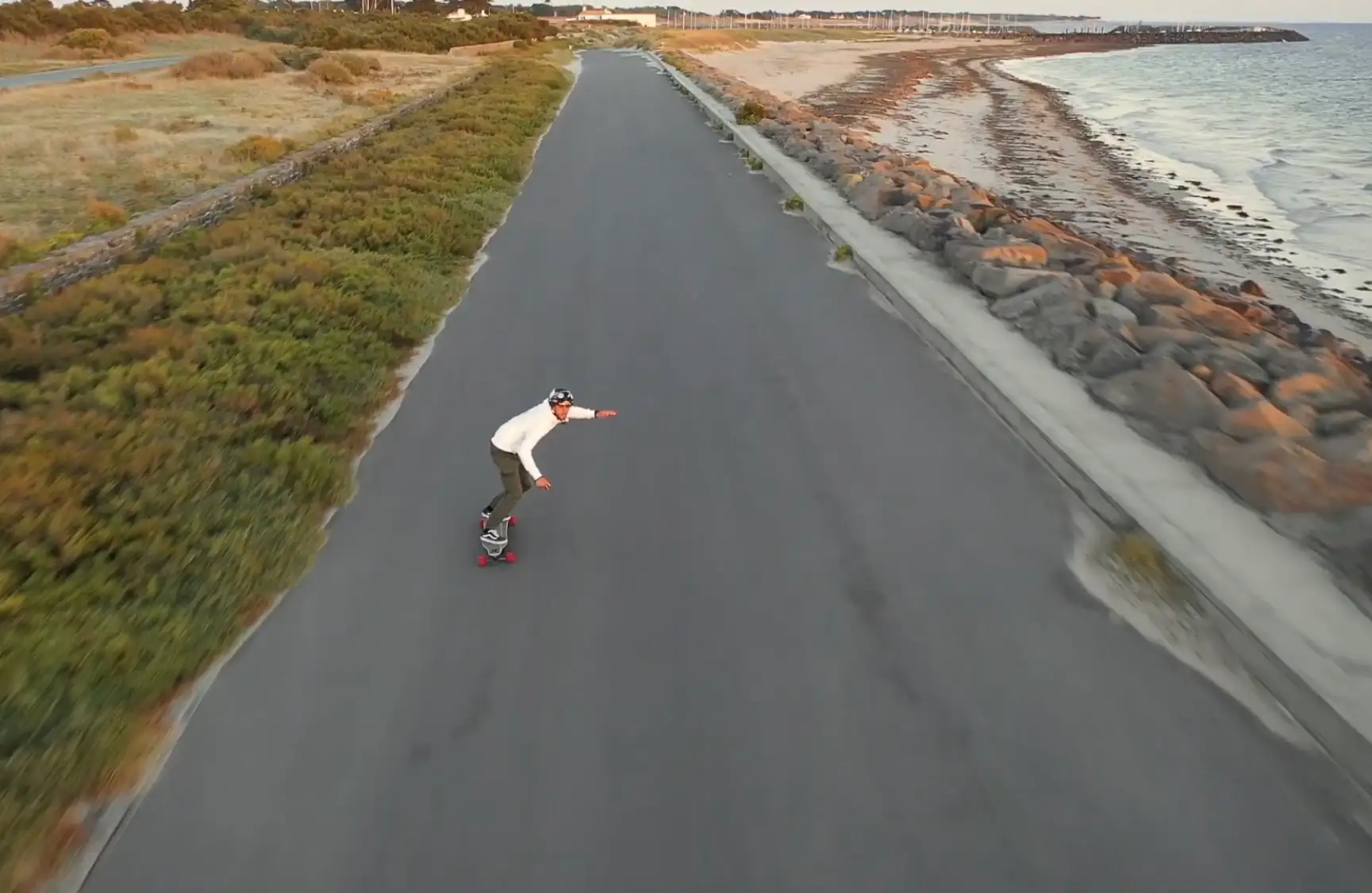
Getting Started with Electric Skateboarding: Max's Tips
From mastering your mindset to joining your first group rides, learn to accelerate, turn, and brake step-by-step.
Your first rides, without skipping any steps
Can you do it? Absolutely! In this guide, packed with Max's expert advice, you'll discover how to find your perfect stance, prepare your board, master the remote control, adopt the ideal posture, and progress smoothly without unnecessary challenges.
Learn to ride with Max's Tips
Watch the 10 steps of the guide in video format: stance, equipment, first starts, posture, braking, and progression.
Getting Started with Electric Skateboarding: The Essentials in One Minute
Always start in Low mode on flat, open ground, and make sure you're wearing a helmet and protective gear. Find your natural stance, keep your knees bent, accelerate gradually, and shift your weight backward when braking. Only move up to the next level once you've fully mastered your trajectory, acceleration, and stopping. At high speeds, always release the accelerator gradually to prevent speed wobble.
Essential Milestones for Getting Started with Electric Skateboarding
Your First Ride
In Low mode, keep your weight slightly forward and accelerate gradually.
Braking
Gradually shift your weight backward.
Wobbles
Bend your knees, engage your core, and never abruptly cut acceleration.
Progression
Increase only one challenge at a time.

Mindset Before Technique
The first question we often hear is, "Can I really do this?" Absolutely! And you don't need any prior skateboarding experience. Electric skateboards are longer than traditional skateboards, and their larger wheels deliver enhanced stability. This reassuring foundation makes those initial meters a breeze.
There's no single rider profile either. While a background in skateboarding, surfing, or snowboarding can certainly help, you can easily start without any prior board sports experience. Here at Evo-Spirit, we welcome riders of all ages, including those over 60.
Your physical fitness largely depends on your preferred riding style. Cruising casually doesn't demand exceptional athleticism. However, if you're chasing speed, tackling technical trails, or aiming for a highly committed ride, you'll need more practice and a higher level of physical conditioning.
Goofy or Regular: Find Your Natural Stance
If your left foot is forward, you're regular. If your right foot is forward, you're goofy. Neither stance is inherently superior; the best one is simply where you feel most stable.
The test Max demonstrates is straightforward. Stand with your back to someone, without knowing exactly when they'll give you a gentle push. The first foot you step forward to catch yourself is typically your back foot on the board.
This test offers an indication, not an absolute rule. Try both stances on the board while it's stationary. Some riders might be goofy when surfing but regular when skateboarding. Later on, gently riding in the opposite direction, known as switch, can boost your balance, but it's not a priority when you're just starting out.
The Right Gear for a Confident Start
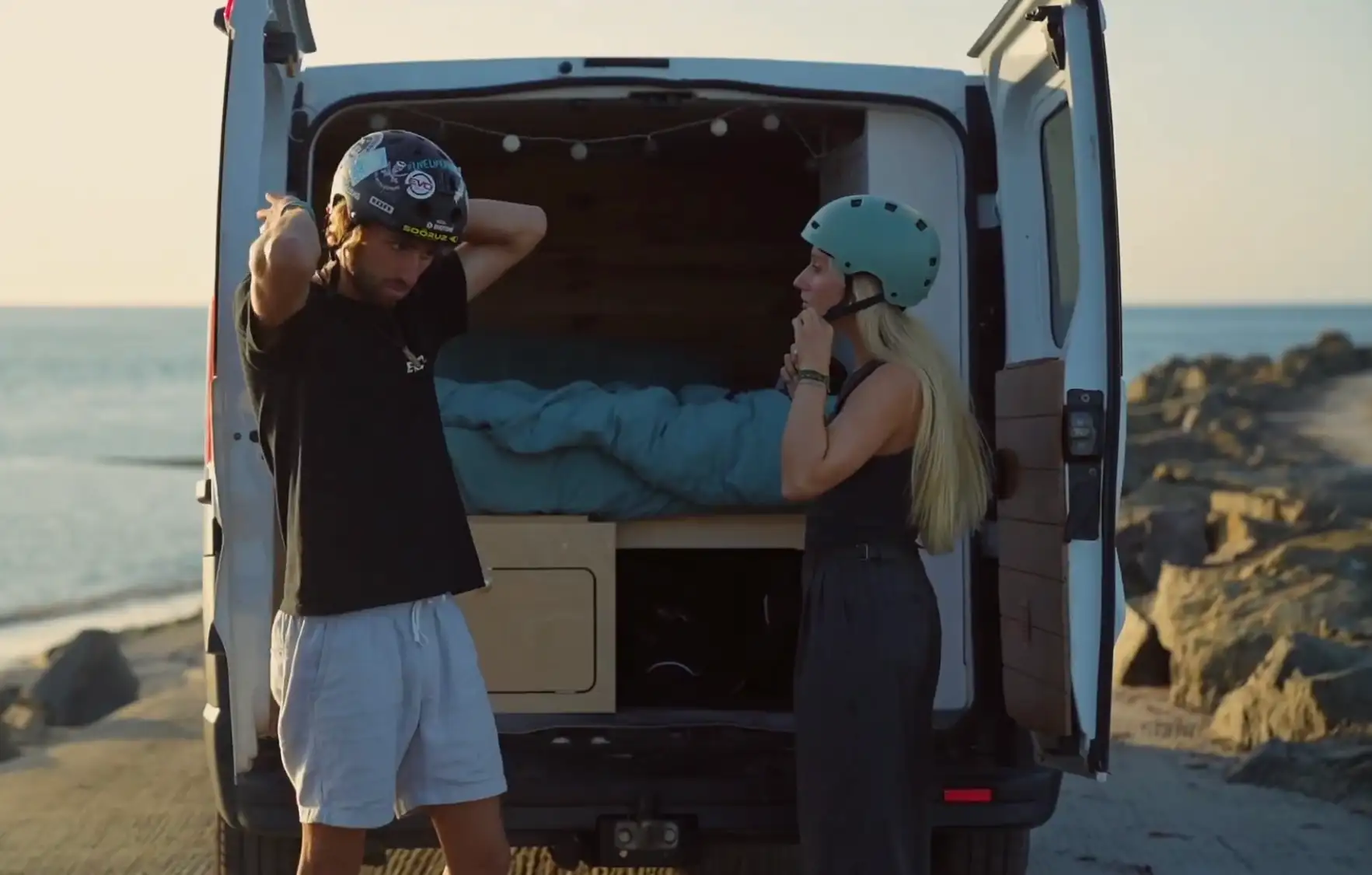
Evo-Spirit strongly recommends always wearing a helmet. To better protect vulnerable areas during a fall, complement your helmet with knee pads, elbow pads, and gloves. Depending on your ride, a back protector and protective shorts can also shield your back, hips, and pelvis.
For footwear, opt for closed sneakers or skate shoes with a relatively thin, flat, and flexible sole. These let you truly feel the board and better gauge your foot pressure. Running shoes with very thick soles, however, tend to filter out those crucial sensations.
Preparing the Board and Terrain
Before your first ride, inspect the tightness of all components, the wheels, the trucks, and the overall condition of the board. Also, ensure both the battery and the remote control are fully charged, and that the remote control is correctly paired.
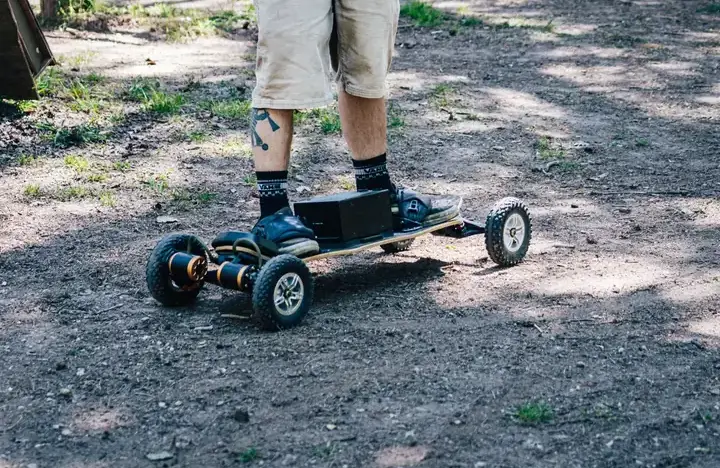
If you're using inflatable wheels designed for trails, a wide, grassy plain makes an excellent learning ground: it offers clear space, and the soft ground provides a better cushion for minor falls. With street wheels, opt for a large, flat, dry, empty, private parking lot with no traffic.
During this initial phase, steer clear of slopes, pedestrians, and obstacles. The goal isn't to go for a full ride yet, but to have ample space to practice each movement without any pressure.
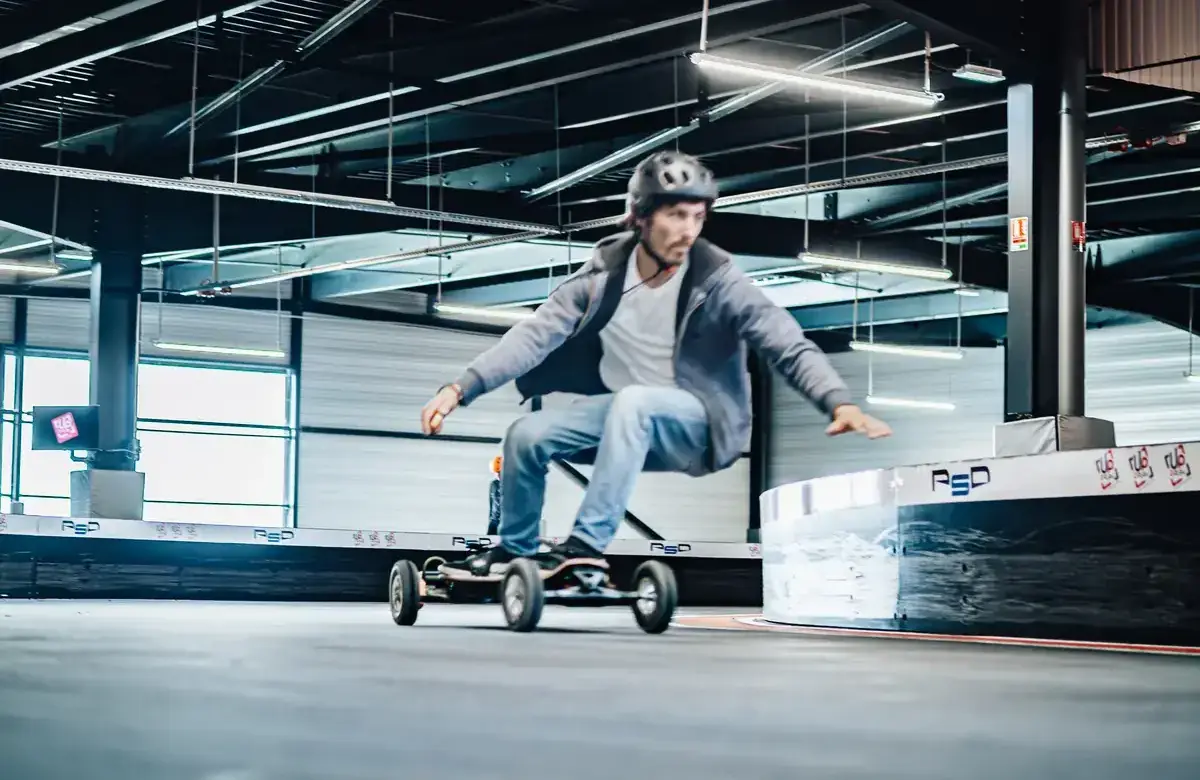
Your First Rides, Step-by-Step
Begin without even stepping on the board. Elevate the wheels and test the remote control: push the trigger forward to accelerate, and pull it backward to brake. You need to understand the trigger's travel and feel its sensitivity before you start moving.
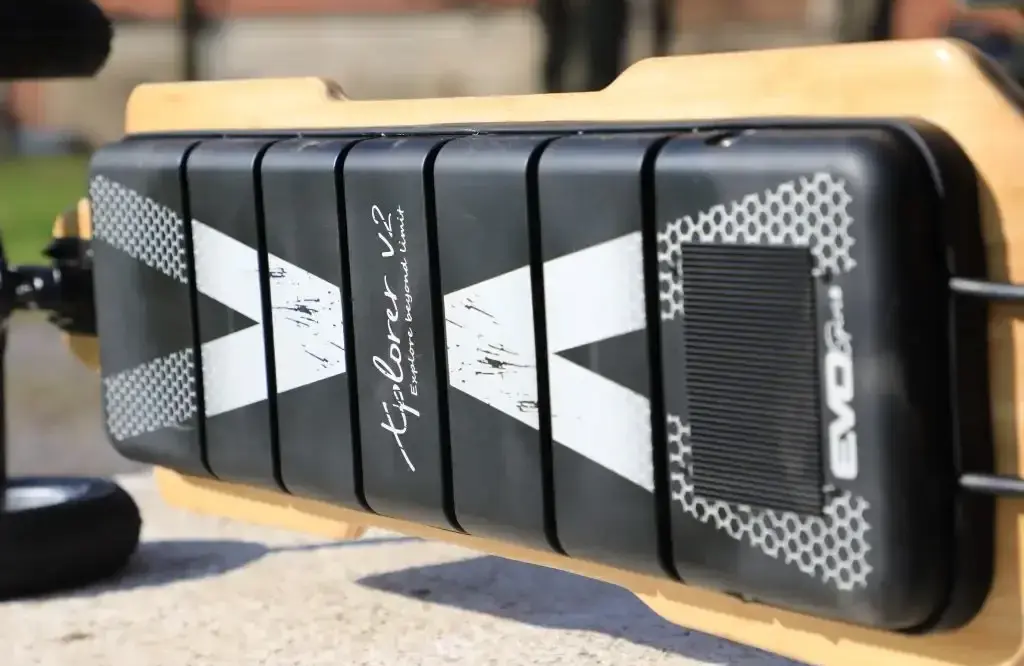
Always select Low mode, our gentlest setting. Once you've mastered it, you can move to Eco, then Sport. For the Xplorer V2, Nexus, and Xcess Pro, Max reminds us that Sport and Sport+ modes deliver serious acceleration: hold off on using them until your control is precise.
Next, step onto the board without accelerating to find your balance. For your first start, shift your weight slightly forward and very gradually engage the throttle. When braking, transfer your weight backward to avoid being thrown forward.
How to Position Yourself on the Board
Spread your feet about shoulder-width apart, or even slightly wider. Stay centered on the board and avoid bringing your feet too close together; a wide stance delivers greater stability. Bend your knees, keep your back straight, and relax your upper body.
When accelerating, put more weight on your front leg. When braking, gradually shift your weight backward. This constant weight transfer lets you work with the board's reactions instead of fighting them.
To turn, don't just rely on your feet. First, orient your gaze and shoulders, then follow the movement with your entire body by pressing on your toes or heels. If turning feels tricky at very low speeds, maintaining a steady pace around 15 km/h in a safe area can make the board feel much more fluid.
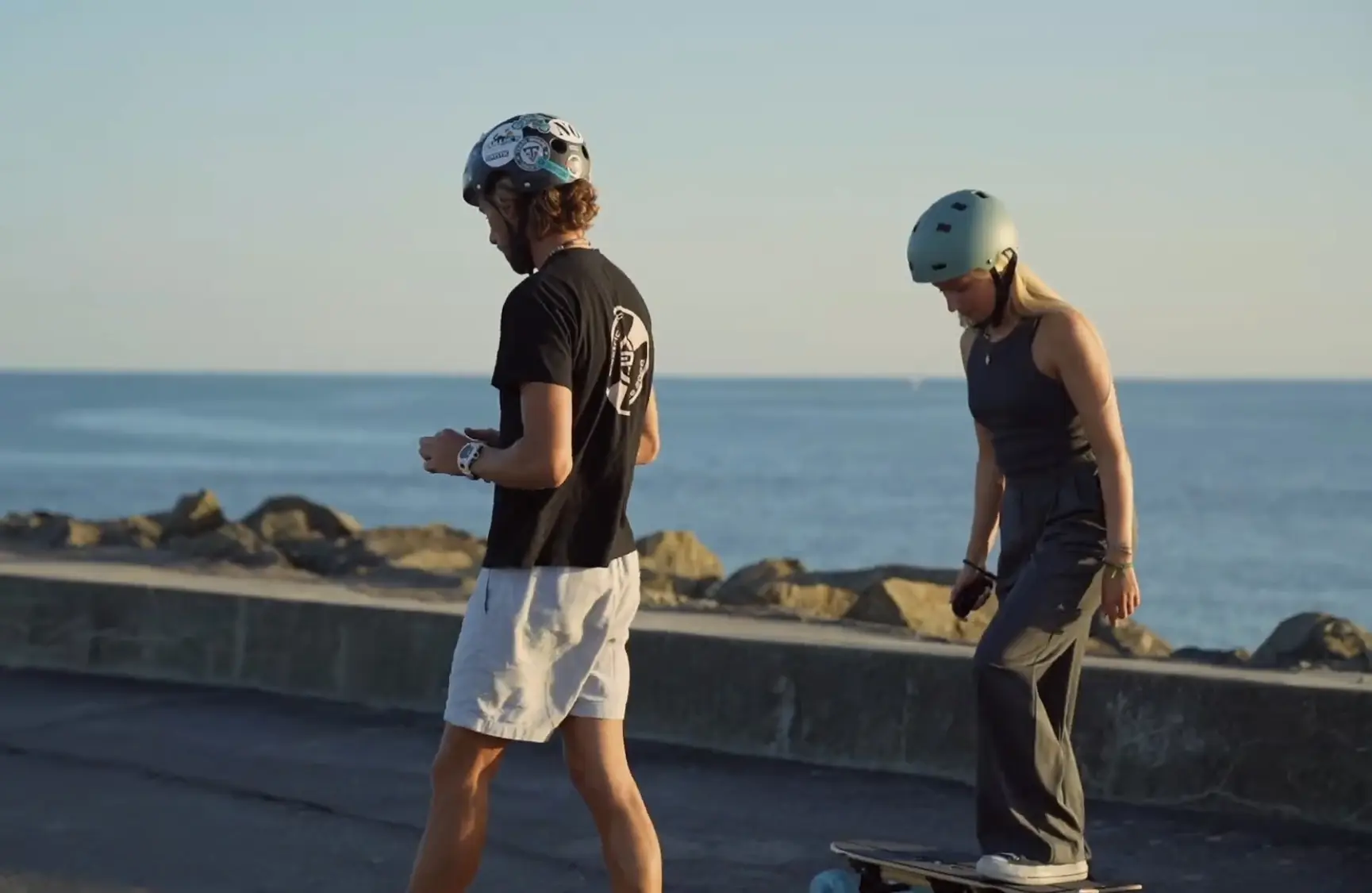
How to React in Case of Loss of Balance or a Fall
If the board starts to wobble, immediately lower your center of gravity: bend your knees deeply while keeping your back straight. This will help you regain stability, and if a fall becomes inevitable, you'll fall from a shorter height.
At low speeds, you can step off with both feet and run in the direction of travel. Do not attempt this at high speeds, as you risk being thrown further. In that case, it's safer to go with the fall and roll on the ground without putting your hands out first.
On a mountainboard, never jump off trying to remove both feet, even without straps: if one foot remains attached, the risk to your ankle or knee increases significantly. It is always safer to fall with the board.
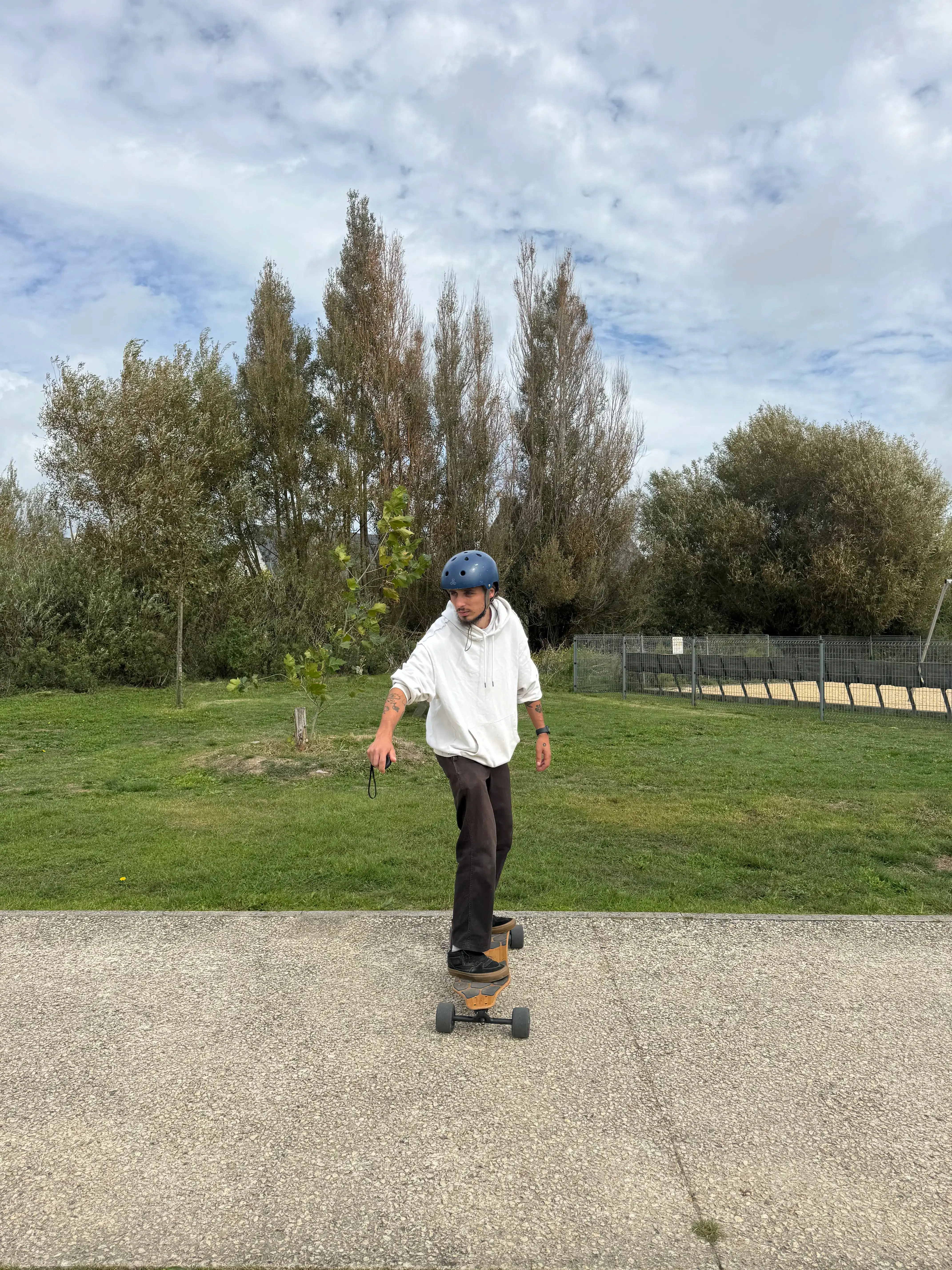
Moving from Beginner to Intermediate
Only move up a mode once you've completely mastered the previous one. Focus on increasing only one difficulty at a time: speed, terrain, duration, or traffic density. You'll find that short, regular sessions lead to much smoother progress than an overly ambitious outing.
At higher speeds on private terrain, oscillations can stem from a rigid posture, insufficient weight over the front of the board, or improperly adjusted trucks. Stay flexed and engaged through your core. When riding at very high speeds, never suddenly release the accelerator; this abrupt shift in weight can trigger a speed wobble. Instead, gradually release the trigger while maintaining a stable stance. Then, adjust the tightness of your trucks incrementally, testing after each minor modification.
Be mindful of regenerative braking: if you immediately head downhill with a 100% charged battery, the board may limit or even deactivate regeneration to protect the battery. It's best to avoid this scenario. Also, make sure to learn foot braking at low speeds as a reliable backup solution, by gradually placing the sole of your foot flat on the ground.
Riding in the City and Joining Group Rides
When riding in the city, make yourself predictable. Announce yourself verbally before passing pedestrians or cyclists, especially if your board has a silent drivetrain. Always anticipate motorists; they might underestimate your acceleration because they see a skateboard, not a motorized vehicle.
In a group ride, the rider in front of you always has priority. They might carve or change trajectory without seeing you. Maintain a safe distance, only overtake after giving a clear warning, and never try to keep pace with the fastest rider.
Simple organization significantly improves safety: a rider with good range should lead the group, an experienced person should bring up the rear, and everyone should communicate obstacles. A clear word or gesture to signal a car, braking, or a hazard ensures that information travels efficiently through the entire group.
Max's Final Advice
Many injuries occur when riders attempt to push beyond their current skill level. Progressing doesn't mean skipping essential steps. If you're comfortable at 20 km/h, aim for 25 km/h, not a direct jump to 40 km/h. If you're just mastering Eco mode, don't immediately switch to Sport+.
Getting Started with Electric Skateboarding: Essential Answers
Getting started with electric skateboarding means learning in a simple, progressive order: first, choose a safe area, then gear up with the right protective gear, understand your remote control, find your natural posture, and finally, master starting, turning, and braking. Evo-Spirit has been designing boards since 2007, offering eight models from urban cruisers to electric mountainboards, with prices ranging from €790 to 2.€390 as of August 13, 2026.
What is an electric skateboard and can you start without experience?
An electric skateboard is a motorized board controlled by a remote control, allowing you to precisely modulate acceleration and braking. You don't need prior experience with skateboarding, surfing, or snowboarding to start. While board sport experience can help with weight distribution, it's not essential. Evo-Spirit recommends beginning in Low mode, on a flat, open area, until you've mastered starting, maintaining your trajectory, and stopping.
What protective gear should you wear to start electric skateboarding?
When you're starting out with electric skateboarding, always wear a properly fitted helmet. Evo-Spirit also highly recommends knee pads, elbow pads, and gloves, as your hands, knees, and elbows are particularly vulnerable in a fall. For faster or all-terrain riding, you can add a back protector and protective shorts to your gear. Finally, make sure to wear closed-toe shoes with flat, flexible soles to give you the best feel for the board.
How to find your goofy or regular stance on an electric skateboard?
On an electric skateboard, a regular stance means your left foot is forward, while a goofy stance puts your right foot forward. To discover your natural position, try both stances on the board while it's stationary. You can also have someone gently push you from behind: the foot you instinctively step forward to catch yourself with usually corresponds to your back foot on the board. This test offers a good indication, but your personal comfort is always the top priority.
How to avoid speed wobble on an electric skateboard?
To minimize speed wobble on your electric skateboard, keep your knees bent, your core engaged, and some of your weight over your front leg. Also, ensure your trucks are adjusted progressively to match your weight and skill level. If the board starts to oscillate, lower your center of gravity and gradually reduce your speed without any sudden movements. At high speeds, never abruptly release the accelerator; always ease off the power gradually to accompany deceleration.
What terrain should you choose for your first electric skateboard rides?
For your first electric skateboard rides, choose a flat, dry, clear area with no traffic. A large lawn works well for all-terrain wheels, offering plenty of space and better cushioning for minor falls. If you're using street wheels, opt for an empty private parking lot with a smooth surface. Avoid slopes, pedestrians, and obstacles until you've fully mastered braking. Before riding elsewhere, be sure to consult our guide on French regulations.
What power mode should you use to start electric skateboarding?
To start electric skateboarding, always select Low mode: it's the gentlest setting on Evo-Spirit boards. This mode smooths out acceleration, making it easier to learn precise remote control. Only move to the next mode when you can start smoothly, maintain your trajectory, turn, and stop cleanly. Sport and Sport+ modes should wait until you have precise control over your stance and braking. You can compare uses in our range of electric skateboards.
How to Learn to Brake Correctly on an Electric Skateboard?
To brake effectively on an electric skateboard, anticipate the distance you'll need, bend your knees, and progressively shift your weight backward as you modulate the trigger. Avoid stiffening up or abruptly pulling the control, as sudden deceleration can throw you forward. First, practice at low speed on flat ground, repeating several starts and stops. Also, learn foot braking at low speed as a reliable backup solution.
Which Evo-Spirit model and price should you choose to start e-skating?
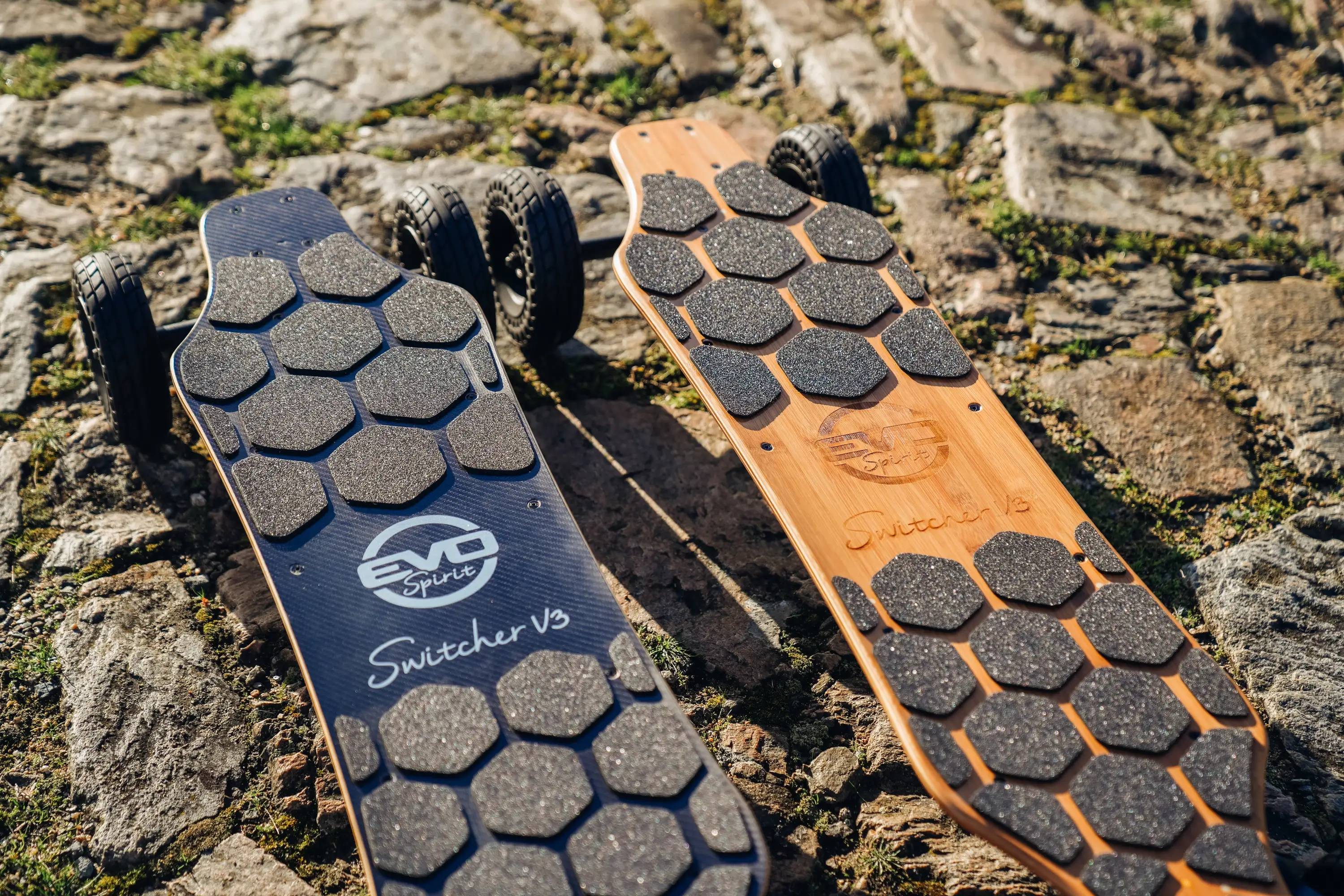
To start electric skateboarding with Evo-Spirit, first consider your preferred terrain. The Cruz V2 is perfect for urban commutes thanks to its nimble design. The Switcher V3 City is ideal for mixed use, blending city riding with trail adventures, while the Xplorer V2 is built for ultimate all-terrain performance. As of August 13, 2026, our eight Evo-Spirit models are priced between €790 and 2.€390, depending on the board and its configuration. Compare all models in our range of electric skateboards.
Your progression in electric skateboarding should always match your skill level: master every move in Low mode before increasing the power, duration, or terrain difficulty. To choose or try a board, contact Evo-Spirit at +33 2 40 22 16 22 or visit us by appointment at 2C avenue du Gulf Stream, 44380 Pornichet.
Ready to ride your first meters?
Our team can help you choose the perfect board, tailored to your preferred terrain, skill level, and riding style.
Explore our boards Evo-Spirit
