How to Start Electric Skateboarding
Tips and Guide to Get Started
Choose your board, get equipped, master the basics, progress step by step and join the e-skate community.
Electric Skateboarding, a new world of riding
Halfway between traditional skateboarding and a modern mode of transport, e-skating combines thrills and everyday practicality.
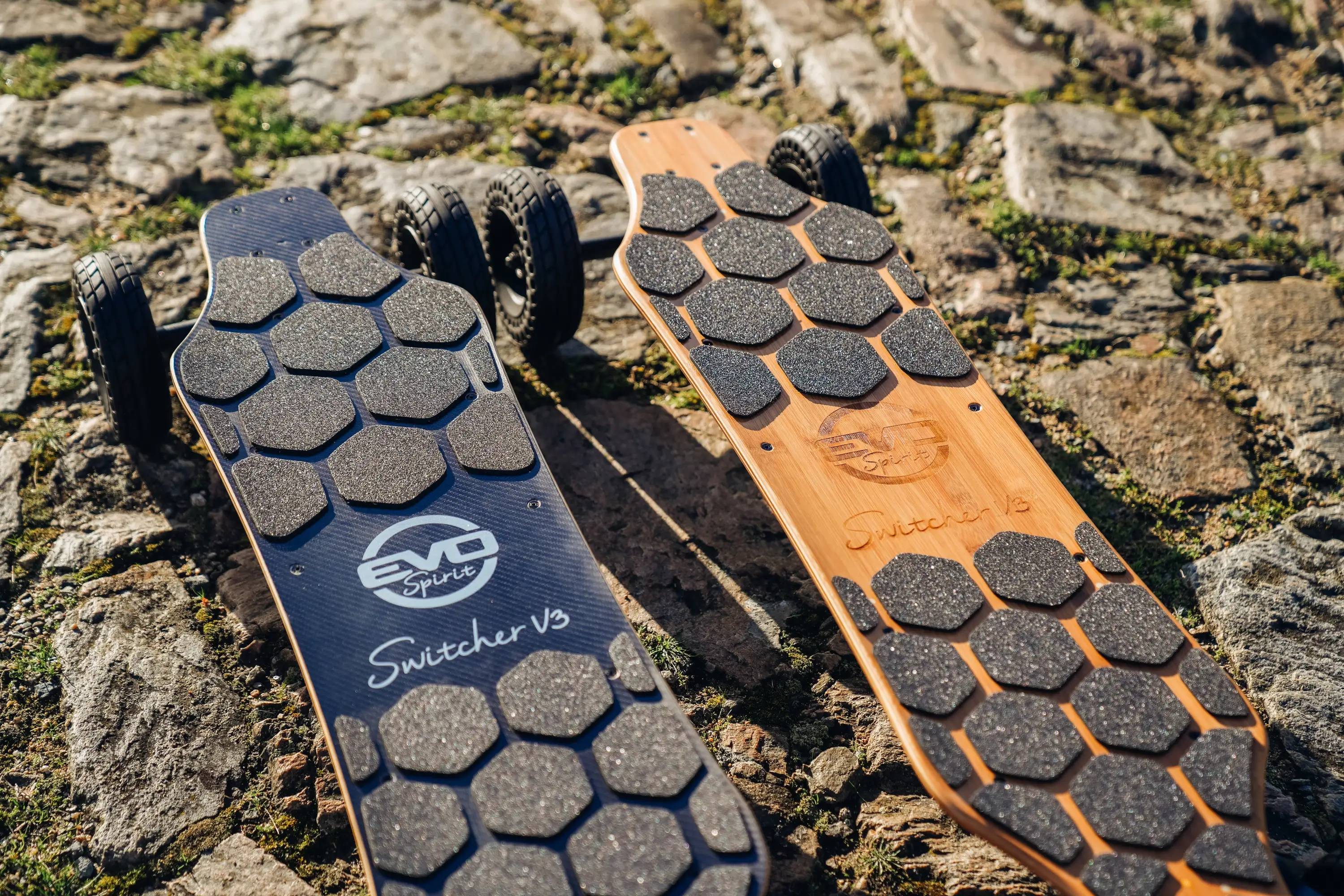
Choose the right board
Before getting on an electric skateboard, it's essential to choose a model that suits your use. So-called street boards, equipped with urethane wheels, are perfect for riding on smooth tarmac and weaving through the city.
If you're looking for more comfort and stability, all-terrain versions with 6-inch wheels or larger allow you to tackle uneven paths without stress. Some hybrid models, called 2-in-1, offer the possibility of easily changing wheels depending on the type of terrain.
How to choose your board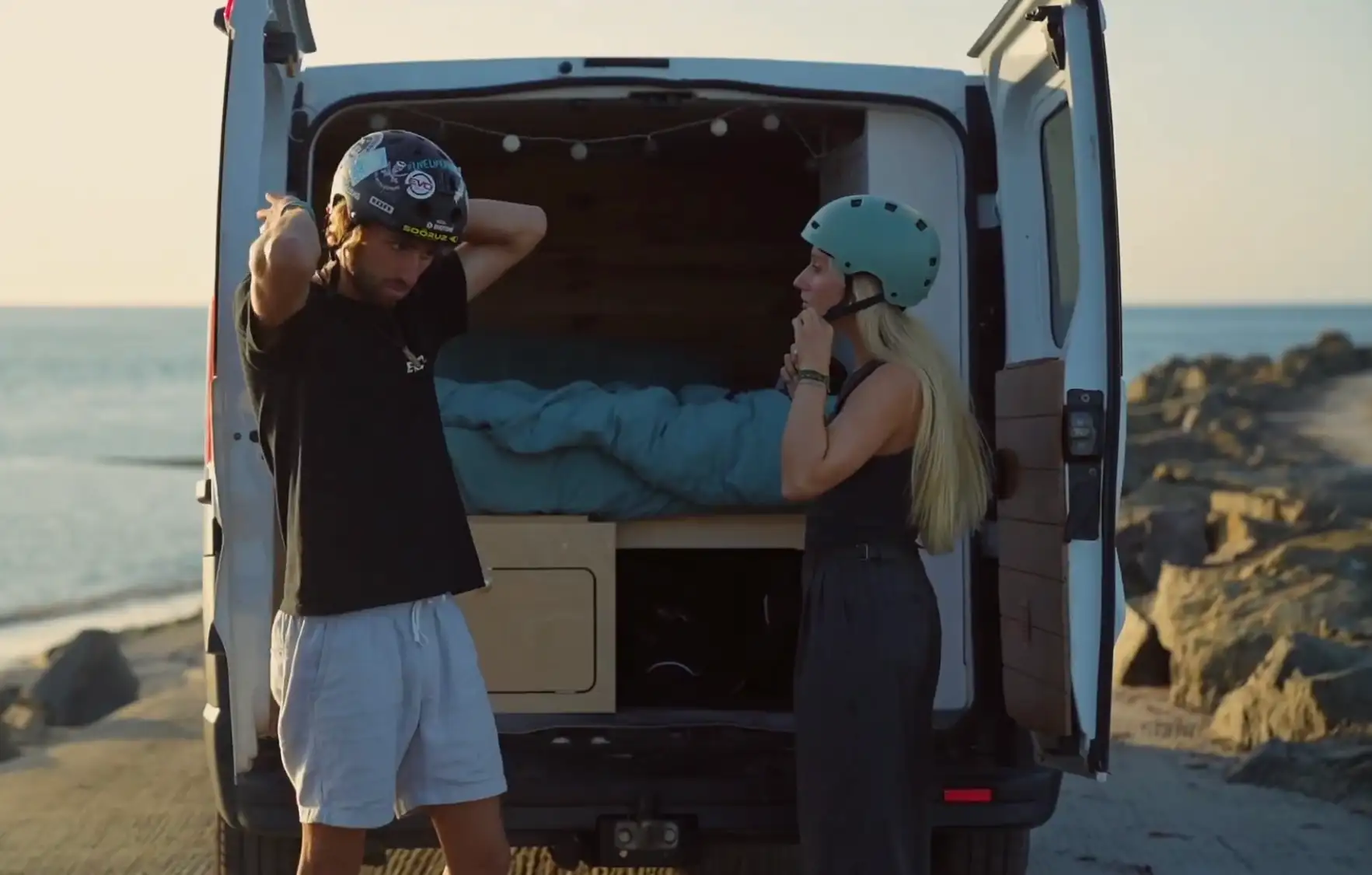
Get properly equipped for safe riding
An electric skateboard is powerful and fast. Even before thinking about tricks or speed, safety must be the priority. A helmet is absolutely essential and should accompany you on every ride.
Protective gear such as knee pads or wrist guards are highly recommended to cushion initial falls. If you ride in the evening, remember to wear visible clothing or use lights: being seen is as important as seeing well.
Learn the basics of riding step by step
Once the board is chosen and the equipment is in place, the long-awaited moment arrives: getting on and starting to ride. It's best to practise in a quiet, open space.
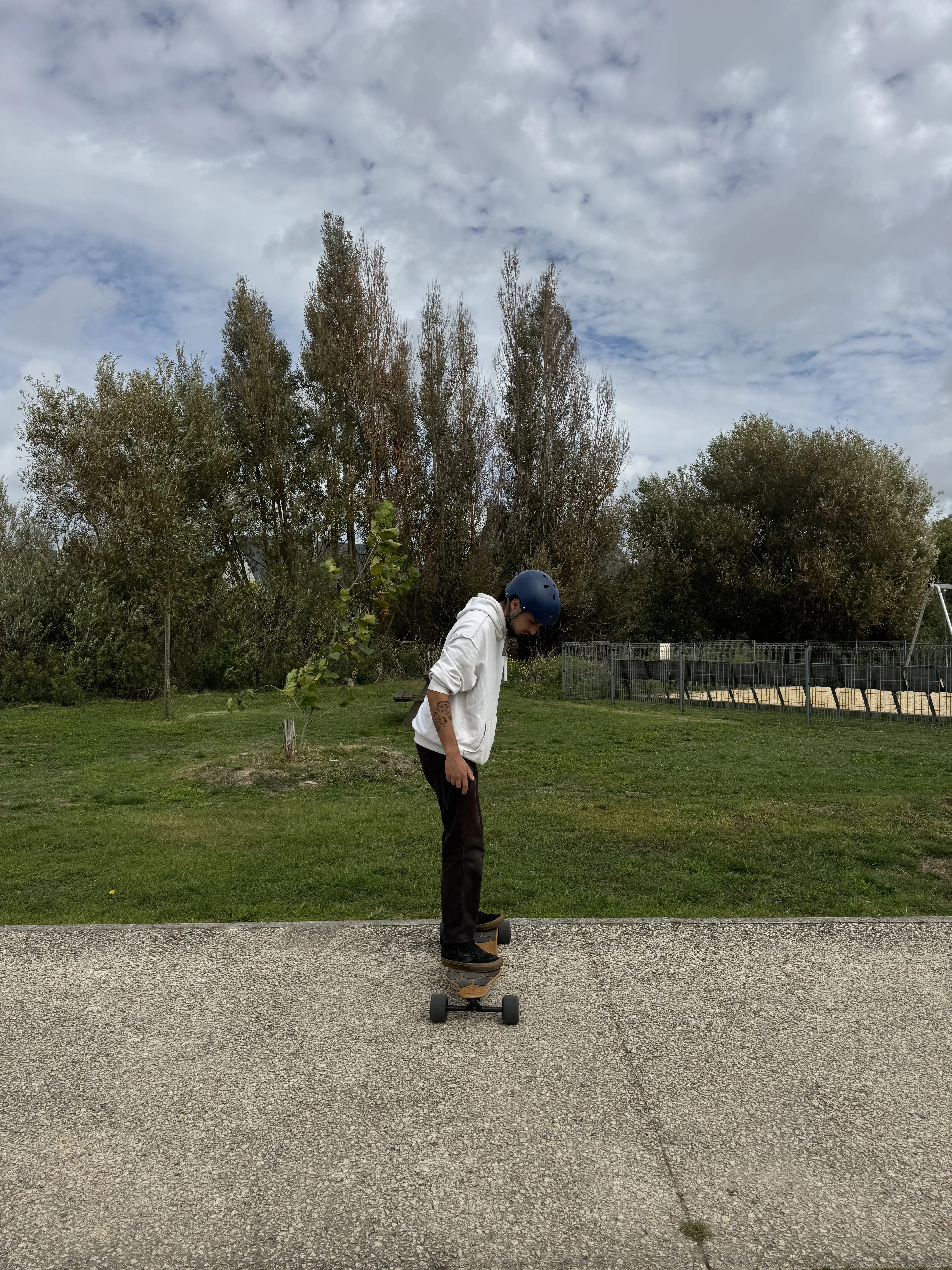
Find your stance and balance
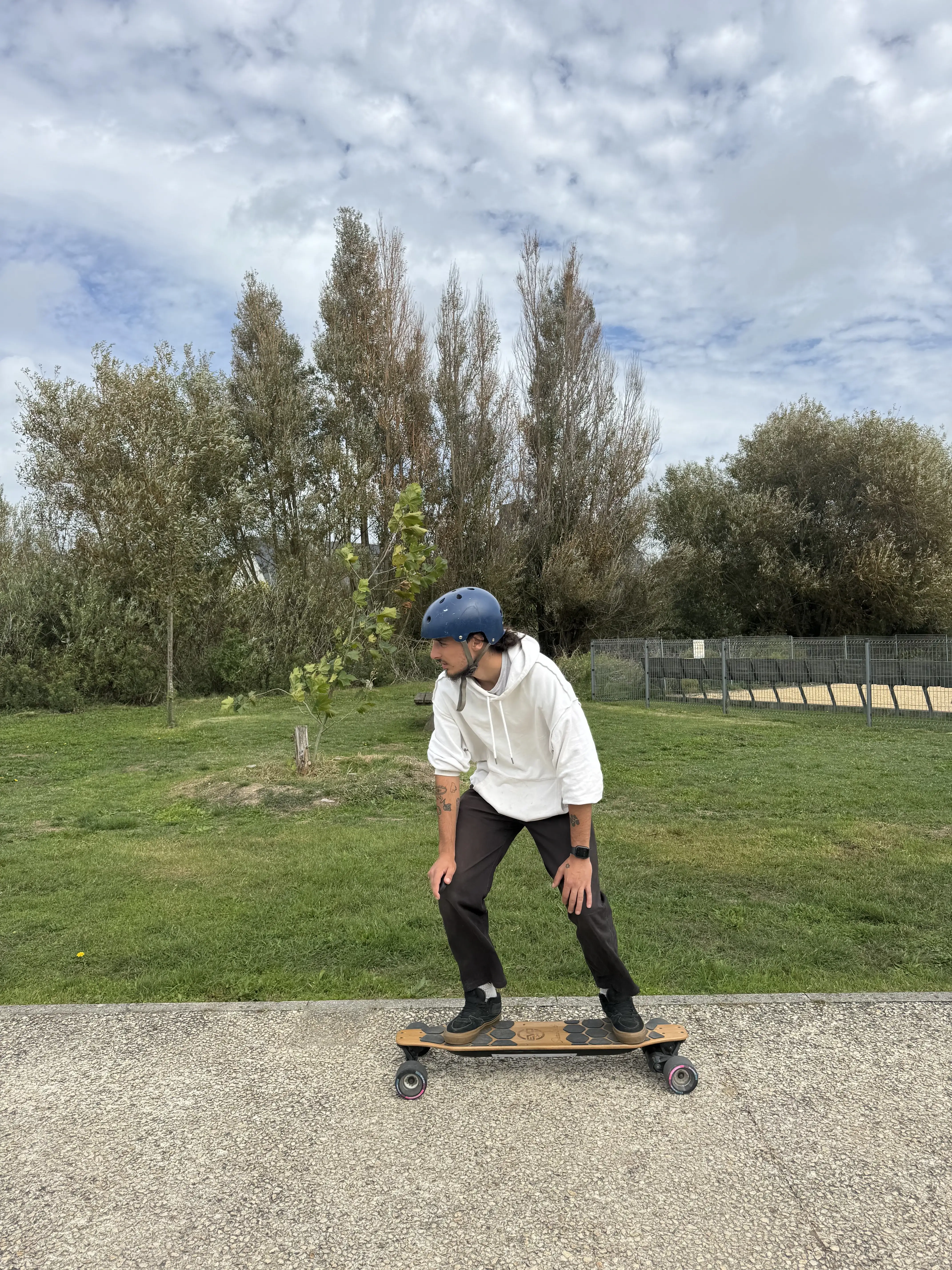
Place your feet stably, shoulder-width apart, and keep your knees slightly bent to better absorb movements. There are two possible stances: regular (left foot forward) and goofy (right foot forward). Simply try both: one will quickly feel more natural.
If you struggle to control the board at first, bend your knees more and lower yourself as much as possible. This lowers your centre of gravity, significantly improves stability, and reduces the risk of injury in case of a fall.
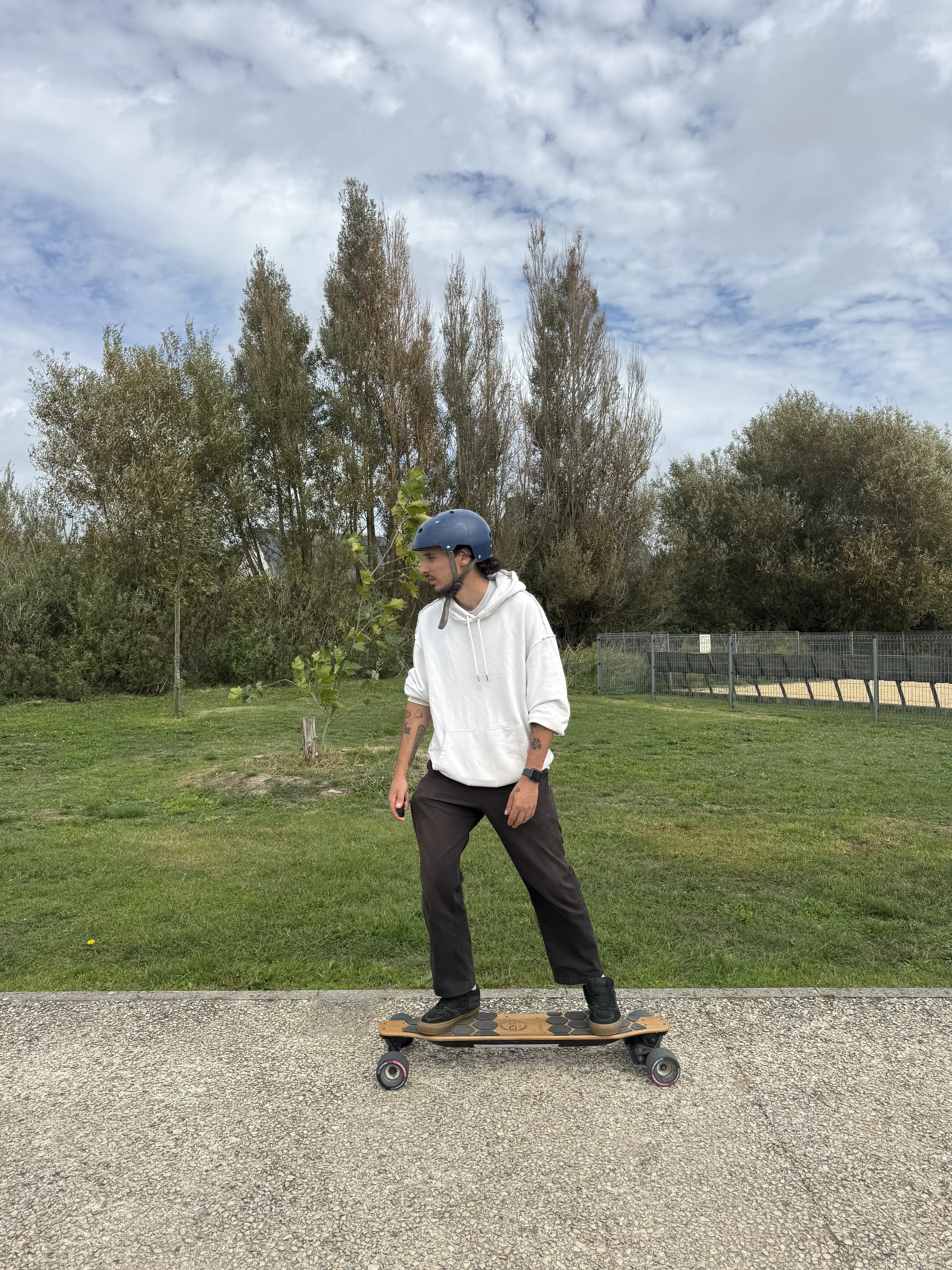
Starting smoothly
When you're ready, give a small push with your back foot like on a classic skateboard. When you press the accelerator, put slightly more weight on your front leg. This stabilises the board, prevents it from rearing up, and makes your first starts much smoother.
Only accelerate very gradually and repeat several times to embed the movement.
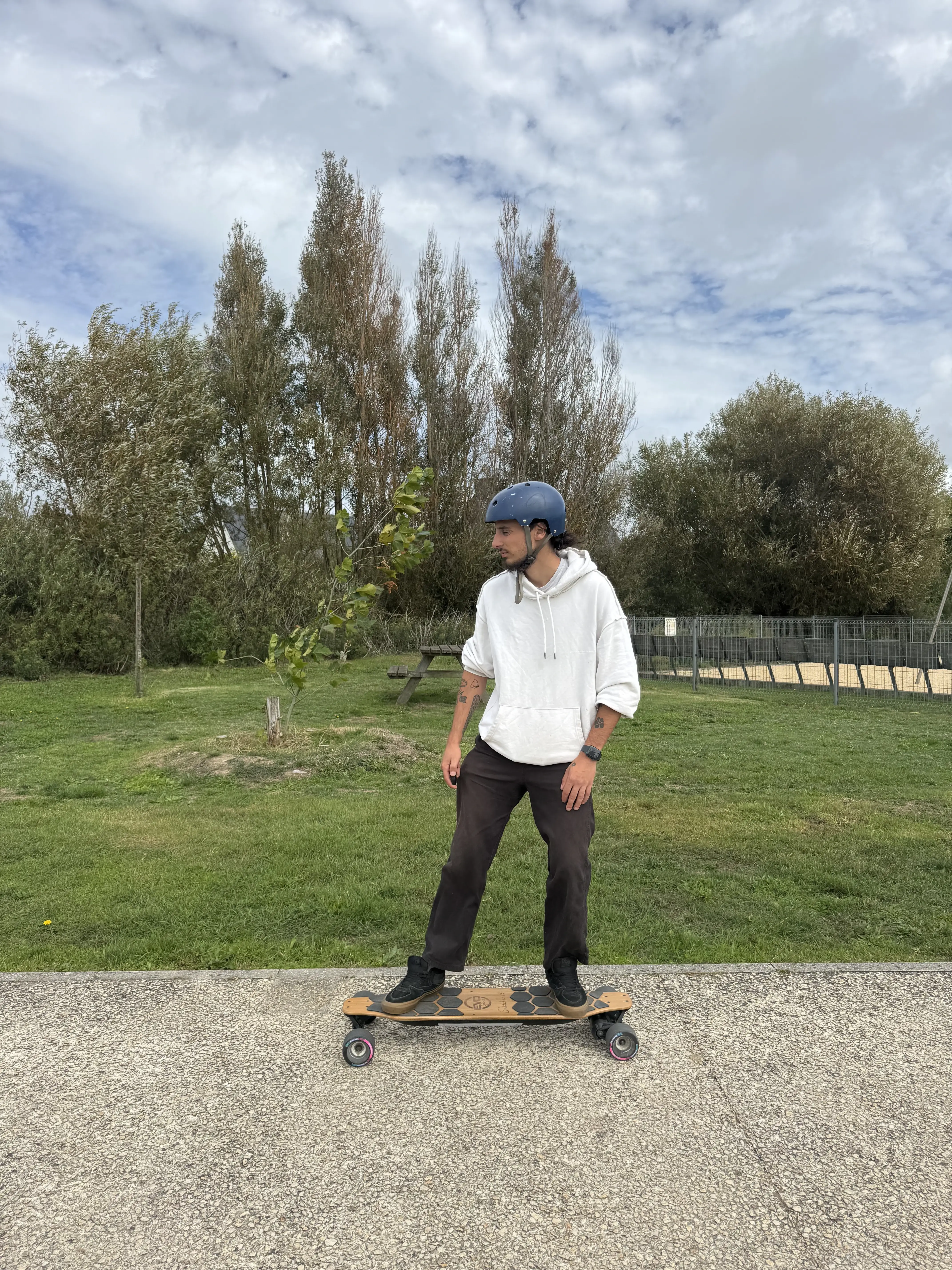
Mastering braking
Braking is often the biggest surprise for beginners. Unlike a classic skateboard, it is entirely controlled by the remote control. To stay balanced, transfer more weight to your back leg when braking.
This movement helps absorb deceleration, prevents you from tipping forward, and maintains control. Always start your braking tests at low speed, then gradually increase.
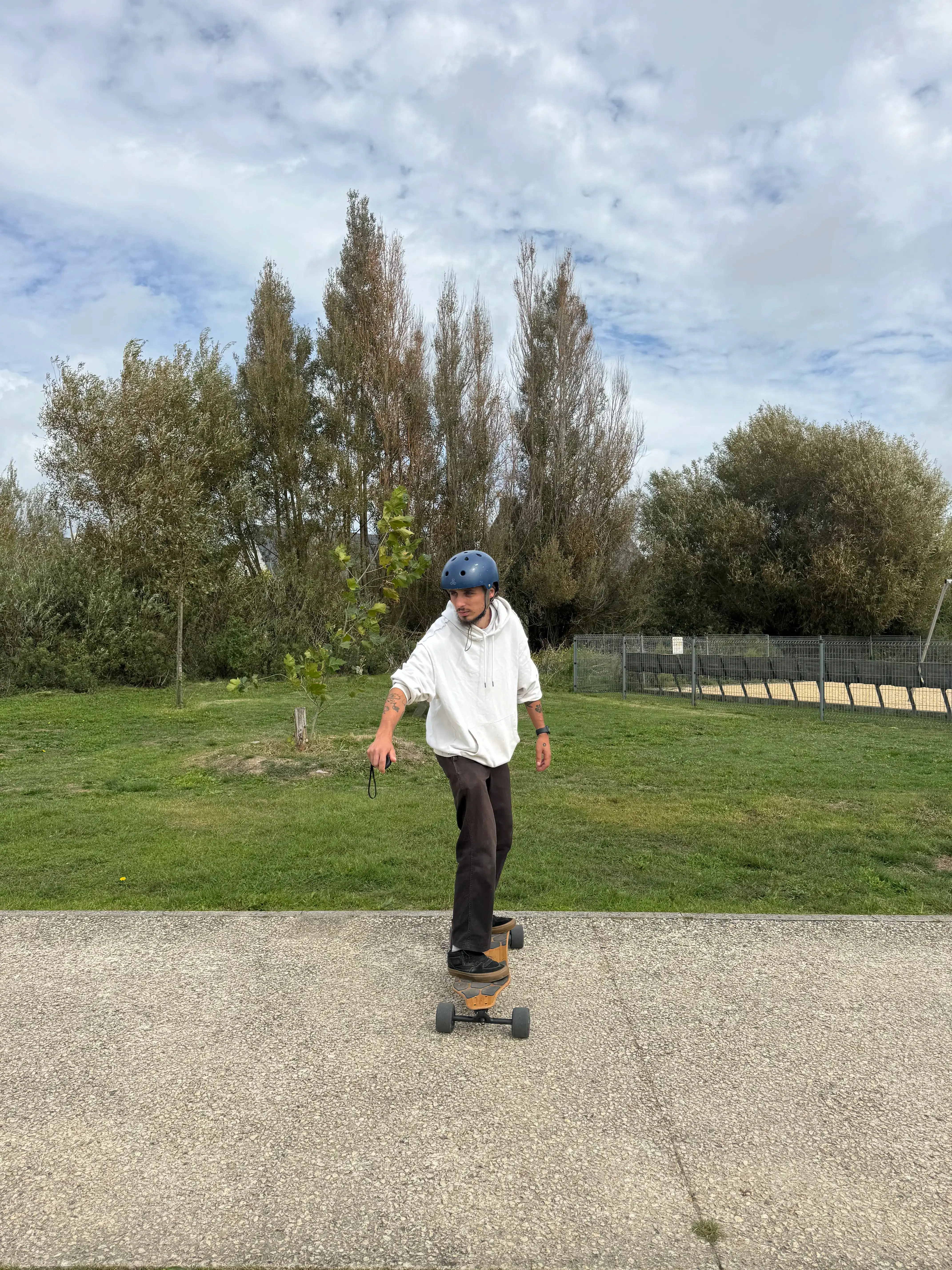
Discovering carving and turns
Once the basics are mastered, explore the pleasure of carving. The principle is simple: your body steers the board. Always look in the direction you want to go; your shoulders and head will lead the rest of your body.
To turn on your toes (toe side), look in the direction of the turn and press on the front of your toes. To turn on your heels (heel side), transfer pressure to your heels while directing your gaze.
Managing your first speeds
Once you are comfortable with starting, braking, and turning, you can begin to increase your speed. E-skates often offer several modes: Eco, Sport, Pro.
Start in Eco, then move up a notch only when you are ready. The key remains progression: it's better to ride confidently at a medium speed than to rush into a mode that's too fast.
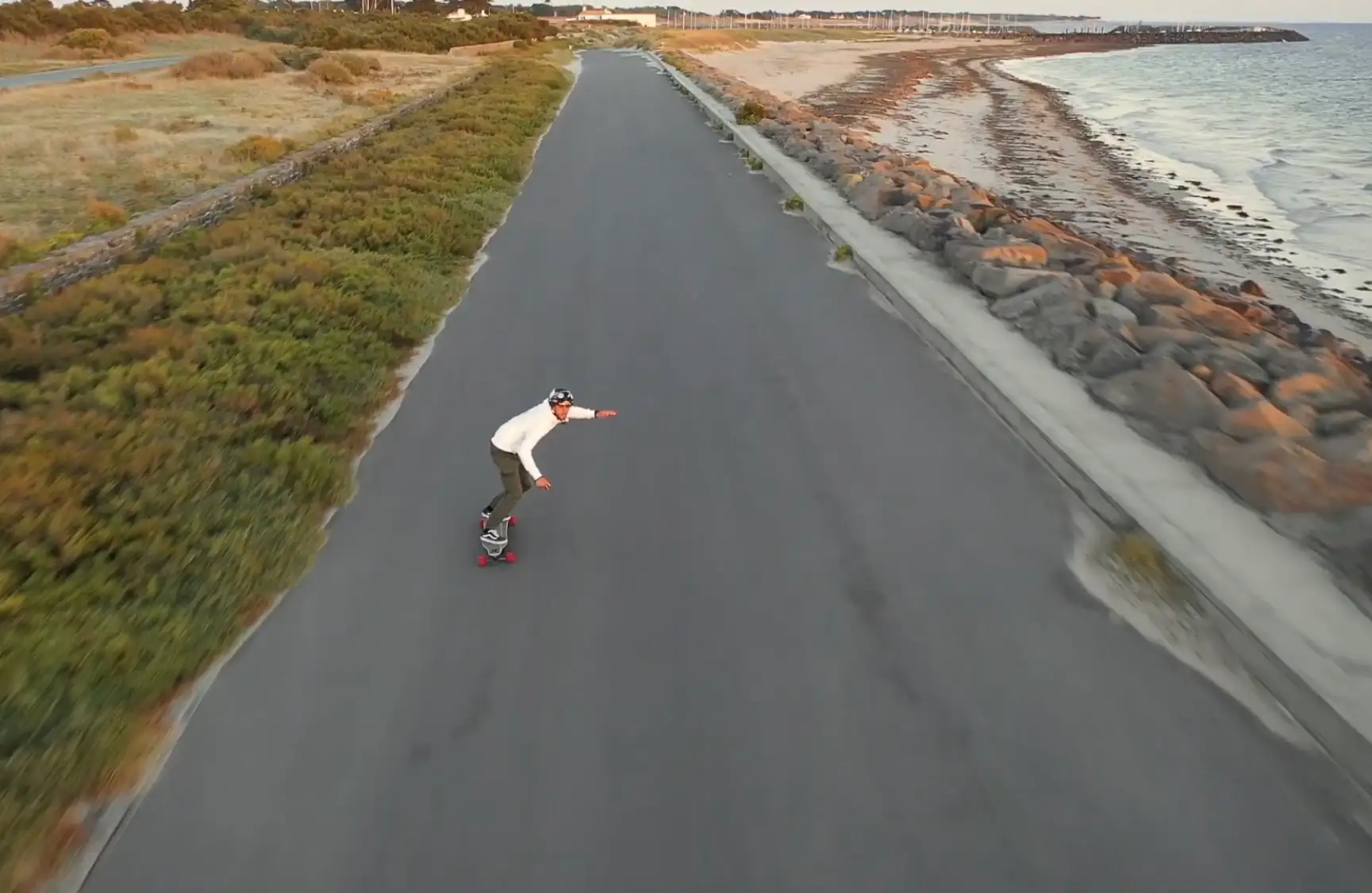
Progress at your own pace
Electric skateboarding is not a race. Every rider progresses at their own pace, and it's important to listen to your feelings. Some will gain confidence in a week, others will need a month to feel comfortable.
The main thing is to remain patient and enjoy the journey. Gradually increase your power, try different types of terrain, and most importantly, have fun.

Join the e-skate community
Don't forget that electric skateboarding is also a collective adventure. Many cities organise group rides, group outings open to all levels. It's the ideal opportunity to progress, share tips, and meet other enthusiasts.
Online communities (forums, Facebook, Discord) are also real goldmines of information for discussing gear, settings, or best practices.
Frequently Asked Questions
What is the top speed of an electric skateboard?
An entry-level e-skate goes about 20 to 25 km/h, while more powerful electric longboards can reach 40 to 50 km/h. For beginners, it's advisable to stick to limited modes around 20-25 km/h.
How long does it take to learn to ride?
Most beginners take between a few hours and a few days to feel comfortable. After a week of regular practise, you'll be able to ride with confidence.
Is a helmet mandatory for electric skateboarding?
A helmet isn't always legally mandatory, but it's highly recommended. It protects you in case of a fall and remains the most important piece of gear for riding safely.
What range does an electric longboard offer?
Depending on battery capacity, the range varies from 15 km for compact models to over 50 km for high-end boards. Range also depends on rider weight, terrain, and the chosen speed mode.
Can you use an electric skateboard in the rain?
It's not recommended to ride in the rain. Most e-skates aren't fully waterproof: water can damage the battery or motors. Also, the road becomes slippery, increasing the risk of falls.
What's the difference between an e-skate and an e-longboard?
An electric skateboard is generally more compact and agile, ideal for short commutes. An electric longboard, with its longer deck and wide trucks, provides more stability, comfort, and range.
Can I change the wheels on my electric skateboard?
Yes, many models allow you to switch from street wheels (urethane) to all-terrain wheels. Belt-drive skateboards are designed to be upgradeable and accept different types of wheels.
Can an electric skateboard be used like a classic skateboard without the battery?
Yes, but it's often less fluid than a traditional skateboard. The weight of the battery and the resistance of the motors make pushing it manually less enjoyable. The e-skate is truly designed to be used in electric mode.
Ready to take your first ride on an e-skate?
Discover our range of electric skateboards and find the board that suits you.
Discover our boards